
Technologies

Recharge well [Tunisia]

Puits de recharge (French)

technologies_1412 - Tunisia

Completeness: 86%

1. General information

1.2 Contact details of resource persons and institutions involved in the assessment and documentation of the Technology

Key resource person(s)

SLM specialist:

Chniter Mongi

Commissariats Régionaux au Développement Agricole CRDA

Tunisia

SLM specialist:

Yahyaoui Houcine

Commissariats Régionaux au Développement Agricole CRDA

Tunisia

SLM specialist:
{'additional_translations': {}, 'value': 'Mohamed Ouessar', 'user_id': '1032', 'unknown_user': False, 'template': 'raw'}
{'additional_translations': {}, 'value': 16, 'label': 'Name of project which facilitated the documentation/ evaluation of the Technology (if relevant)', 'text': 'Book project: Water Harvesting – Guidelines to Good Practice (Water Harvesting)', 'template': 'raw'} {'additional_translations': {}, 'value': 16, 'label': 'Name of project which facilitated the documentation/ evaluation of the Technology (if relevant)', 'text': 'Book project: Water Harvesting – Guidelines to Good Practice (Water Harvesting)', 'template': 'raw'} {'additional_translations': {}, 'value': 503, 'label': 'Name of the institution(s) which facilitated the documentation/ evaluation of the Technology (if relevant)', 'text': 'Institut des Régions Arides de Médenine (Institut des Régions Arides de Médenine) - Tunisia', 'template': 'raw'} {'additional_translations': {}, 'value': 503, 'label': 'Name of the institution(s) which facilitated the documentation/ evaluation of the Technology (if relevant)', 'text': 'Institut des Régions Arides de Médenine (Institut des Régions Arides de Médenine) - Tunisia', 'template': 'raw'}

1.3 Conditions regarding the use of data documented through WOCAT

The compiler and key resource person(s) accept the conditions regarding the use of data documented through WOCAT:

Yes

1.4 Declaration on sustainability of the described Technology

Is the Technology described here problematic with regard to land degradation, so that it cannot be declared a sustainable land management technology?

No

1.5 Reference to Questionnaire(s) on SLM Approaches (documented using WOCAT)
2. Description of the SLM Technology

2.1 Short description of the Technology

Definition of the Technology:

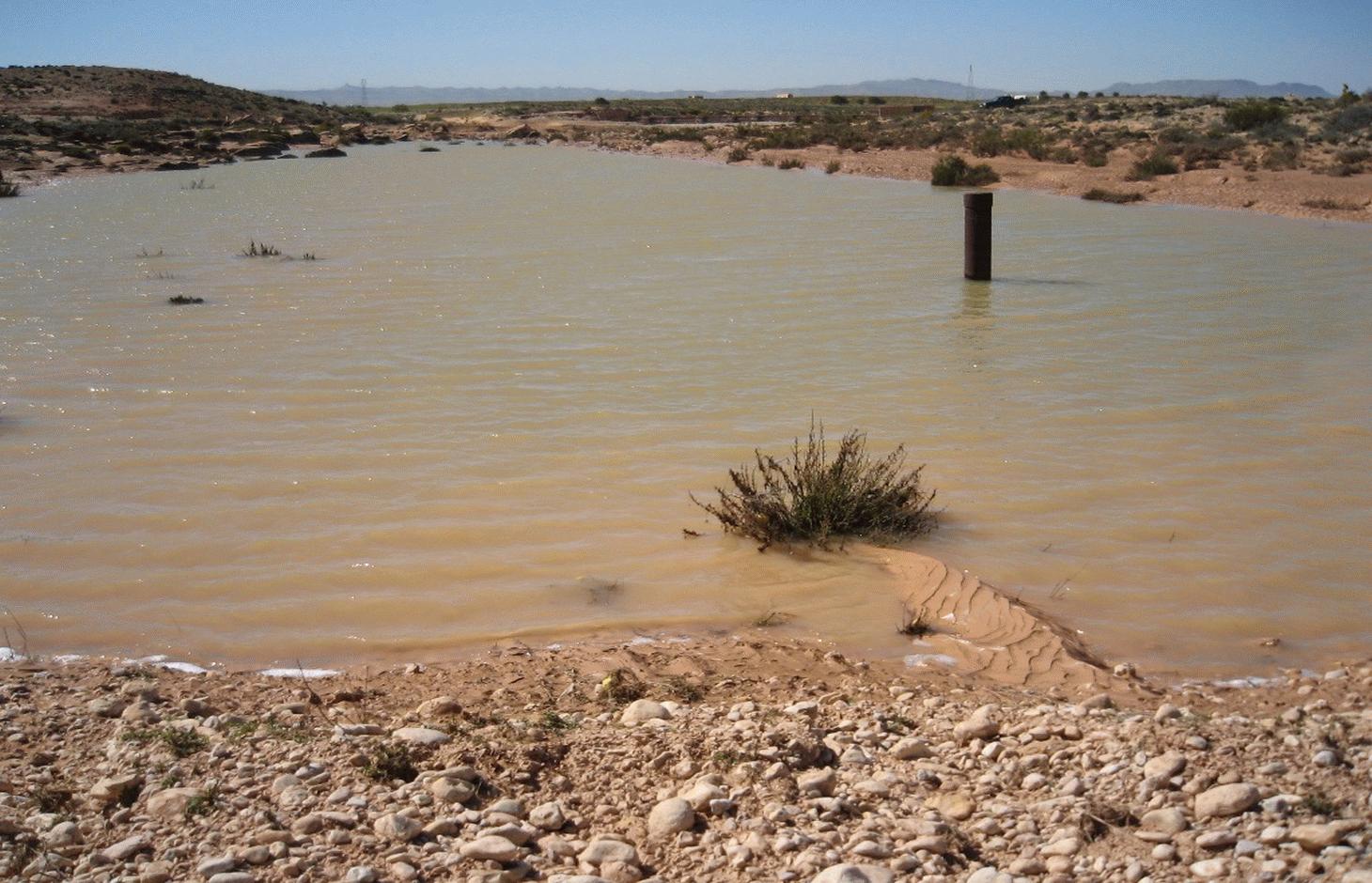
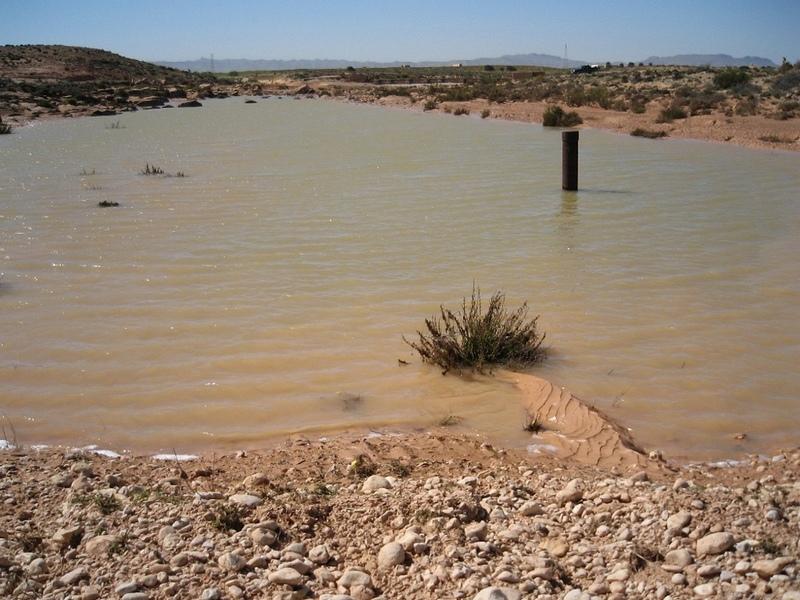
A recharge well comprises a drilled hole, up to 30-40 m deep that reaches the water table, and a surrounding filter used to allow the direct injection of floodwater into the aquifer.

2.2 Detailed description of the Technology

Description:

The main worldwide used methods to enhance groundwater replenishment are through recharge basins or recharge wells. Though groundwater recharge aiming at storage of water in the periods of abundance for recovery in times of drought has a long history dating back millennia, the recharge wells began to be used only in the twentieth century, especially during the Second World War following concerns on attacks of the water supply facilities. Its use was extended later to sea intrusion control, treated waste water, water harvesting in the dry areas, and strategic water storage.

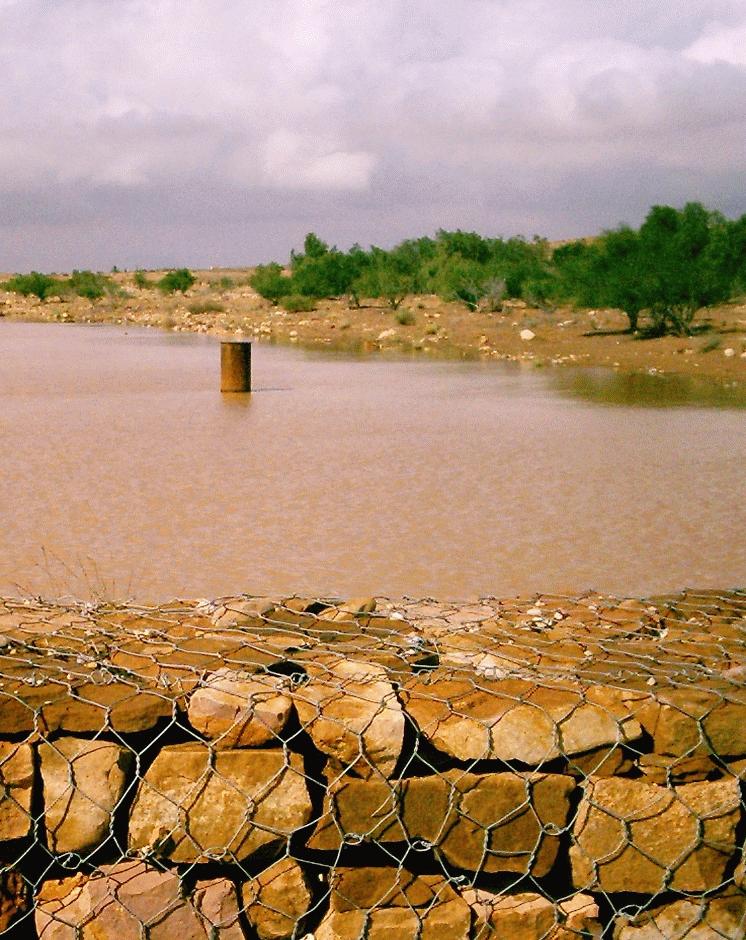
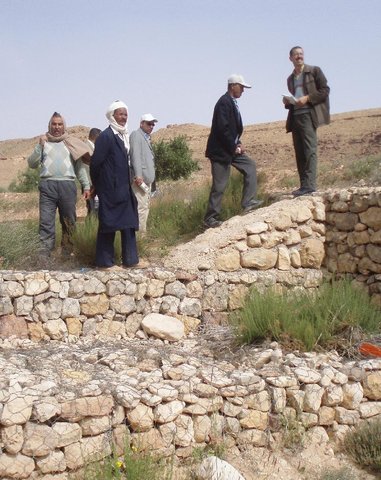
Purpose of the Technology: Recharge wells are used in combination with gabion check dams to enhance the infiltration of floodwater into the aquifer. In areas where the permeability of the underlying bedrock in front of a gabion is judged too low, recharge wells could be installed in wadi (ephemeral river) beds. Water is retained by the gabion check dam and it flows through the recharge well allowing accelerated percolation into the aquifer.

Establishment / maintenance activities and inputs: A recharge well consists of a long inner tube surrounded by an outer tube, the circumference of which ranges between 1 and 2 m. The area between the tubes is filled with river bed gravel which acts as a sediment filter. Water enters the well through rectangular-shaped openings (almost 20 cm long and a few mm in width) located in the outer tube, and it flows in the inner hole having passed through the gravel and the rectangular shaped openings of the dill hole. The above-ground height is around 2 to 3 m whereas the depth is linked to the depth of the water table (normally up to 40 m). The drill hole connects directly with the aquifer, where it is connected either directly with the water table or indirectly via cracks. Pond volume is dependent on the size of the gabion check dam but generally ranges between 500 and 3000 m3. The filtered water can directly flow into the aquifer at a rate exceeding what would occur naturally through the soil and the underlying strata.
The design should be conducted primarily by a hydrogeologist and a soil and water conservation specialist in order to determine the potential sites and the required drilling equipment. Drilling needs to be carried out by a specialized company.
Depending on the geological setting, the overall cost is around 5000 to 10000 US$. The recharge wells are used to recharge the deep groundwater aquifers, which are mainly exploited by government agencies. However, private irrigated farms are benefiting indirectly by increased groundwater availability.

Natural / human environment: This technique has been first tried for the replenishment of the Zeuss-Koutine aquifer (south east Tunisia).

2.3 Photos of the Technology

2.5 Country/ region/ locations where the Technology has been applied and which are covered by this assessment

Country:

Tunisia

Region/ State/ Province:

Medenine

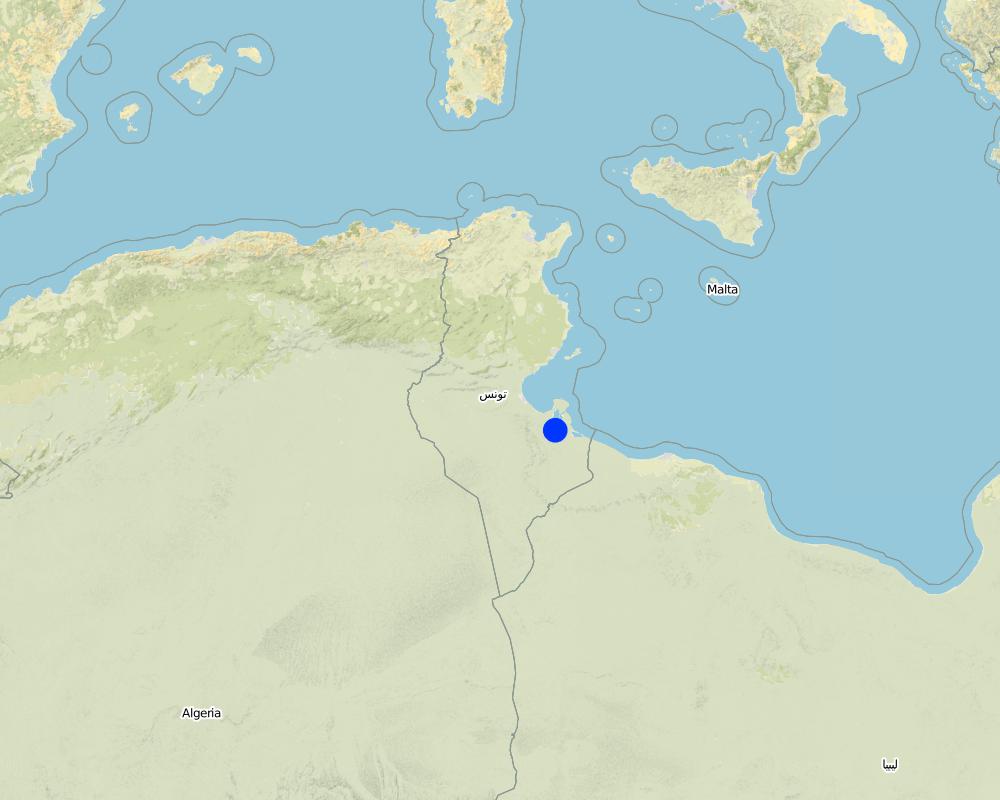
Further specification of location:

Medenine nord

Specify the spread of the Technology:
  • evenly spread over an area
If precise area is not known, indicate approximate area covered:
  • 10-100 km2
{'is_geometry': True, 'configuration': 'technologies', 'additional_translations': {}, 'key': 'Map', 'value': '{"type":"FeatureCollection","features":[{"type":"Feature","id":1488626209625,"geometry":{"type":"Point","coordinates":[10.778,33.350999999999985]},"properties":null}]}', 'questionnaire_object': <Questionnaire: {"qg_name": [{"name": {"en": "Recharge well", "fr": "Puits filtrants"}, "name_local": {"en": "Puits de recharge (French)", "fr": "Puits de recharge (French)"}}], "qg_photos": [{"image": "3ca29c88-e9b3-4dcd-95fd-dc4ba0ae4161", "image_date": "01/02/2007", "image_caption": {"en": "Recharge well behind a gabion check dam after rain storm.", "fr": "Recharge well derri\u00e8re un barrage de gabions apr\u00e8s la temp\u00eate."}, "image_location": {"en": "Koutine, Medenine", "fr": "Koutine, Medenine"}, "image_photographer": {"en": "Ouessar M (Medenine, Tunisia)", "fr": "Ouessar M (Medenine, Tunisia)"}}, {"image": "ec3af07b-31c0-4505-905f-7d40978bf8b8", "image_date": "01/02/2007", "image_caption": {"en": "This is an example of a recharge well behind a gabion check dam after rain.", "fr": "Ceci est un example recharge well derri\u00e8re un barrage de gabions apr\u00e8s la pluie."}, "image_location": {"en": "Koutine, Medenine", "fr": "Koutine, Medenine"}, "image_photographer": {"en": "Ouessar M", "fr": "Ouessar M"}}, {"image": "035a9a26-d4a8-419f-a570-2562169140cd", "image_caption": {"en": "A recharge well needs to be always combined with a gabion check dam which prevents floodwater movement downstream and creates a temporary pond", "fr": "Un recharge well doit toujours \u00eatre combin\u00e9 avec un barrage \u00e0 gabions qui emp\u00eache le mouvement des eaux de crue en aval et cr\u00e9e un bassin temporaire."}, "image_photographer": {"en": "Temmerman S.", "fr": "Temmerman S."}}], "tech_qg_1": [{"tech_definition": {"en": "A recharge well comprises a drilled hole, up to 30-40 m deep that reaches the water table, and a surrounding filter used to allow the direct injection of floodwater into the aquifer.", "fr": "Un puits filtrant est un puits for\u00e9 \u00e0 30-40 m de profondeur, entour\u00e9 d\u2019un filtre et atteignant la nappe phr\u00e9atique. Il permet de faire p\u00e9n\u00e9trer l\u2019eau directement dans l\u2019aquif\u00e8re."}}], "tech_qg_2": [{"tech_description": {"en": "The main worldwide used methods to enhance groundwater replenishment are through recharge basins or recharge wells. Though groundwater recharge aiming at storage of water in the periods of abundance for recovery in times of drought has a long history dating back millennia, the recharge wells began to be used only in the twentieth century, especially during the Second World War following concerns on attacks of the water supply facilities. Its use was extended later to sea intrusion control, treated waste water, water harvesting in the dry areas, and strategic water storage.\r\n\r\nPurpose of the Technology: Recharge wells are used in combination with gabion check dams to enhance the infiltration of floodwater into the aquifer. In areas where the permeability of the underlying bedrock in front of a gabion is judged too low, recharge wells could be installed in wadi (ephemeral river) beds. Water is retained by the gabion check dam and it flows through the recharge well allowing accelerated percolation into the aquifer.\r\n\r\nEstablishment / maintenance activities and inputs: A recharge well consists of a long inner tube surrounded by an outer tube, the circumference of which ranges between 1 and 2 m. The area between the tubes is filled with river bed gravel which acts as a sediment filter. Water enters the well through rectangular-shaped openings (almost 20 cm long and a few mm in width) located in the outer tube, and it flows in the inner hole having passed through the gravel and the rectangular shaped openings of the dill hole. The above-ground height is around 2 to 3 m whereas the depth is linked to the depth of the water table (normally up to 40 m). The drill hole connects directly with the aquifer, where it is connected either directly with the water table or indirectly via cracks. Pond volume is dependent on the size of the gabion check dam but generally ranges between 500 and 3000 m3. The filtered water can directly flow into the aquifer at a rate exceeding what would occur naturally through the soil and the underlying strata.\r\nThe design should be conducted primarily by a hydrogeologist and a soil and water conservation specialist in order to determine the potential sites and the required drilling equipment. Drilling needs to be carried out by a specialized company. \r\nDepending on the geological setting, the overall cost is around 5000 to 10000 US$. The recharge wells are used to recharge the deep groundwater aquifers, which are mainly exploited by government agencies. However, private irrigated farms are benefiting indirectly by increased groundwater availability.\r\n\r\nNatural / human environment: This technique has been first tried for the replenishment of the Zeuss-Koutine aquifer (south east Tunisia).", "fr": "Les principales m\u00e9thodes de recharge des eaux souterraines utilis\u00e9es dans le monde sont les bassins d\u2019infiltration et des puits filtrants. Bien que la recharge des nappes phr\u00e9atiques par la r\u00e9colte d\u2019eau en p\u00e9riode d\u2019abondance pour une r\u00e9utilisation en p\u00e9riode s\u00e8che ait une histoire pluri-mill\u00e9naire, les puits filtrants n\u2019ont commenc\u00e9 a \u00eatre utilis\u00e9s qu\u2019au vingti\u00e8me si\u00e8cle, en particulier pendant la seconde guerre mondiale, \u00e0 cause de l\u2019inqui\u00e9tude des attaques sur les dispositifs de stockage d\u2019eau. Leur utilisation a ensuite \u00e9t\u00e9 \u00e9largie au contr\u00f4le des infiltrations d\u2019eau sal\u00e9e, au traitement des eaux us\u00e9es, \u00e0 la r\u00e9colte d\u2019eau en zone s\u00e8che et au stockage strat\u00e9gique de l\u2019eau.\r\n\r\nObjet de la technologie: Afin d\u2019am\u00e9liorer l\u2019infiltration de l\u2019eau des crues dans l\u2019aquif\u00e8re, les puits filtrants sont combin\u00e9s avec des barrages en gabions. Dans les zones o\u00f9 la perm\u00e9abilit\u00e9 de la couche rocheuse sous-jacente est jug\u00e9e trop faible en amont du gabion, le puits filtrant peut \u00eatre install\u00e9 dans le lit d\u2019un wadi (oueds ou cours d\u2019eau temporaires). L\u2019eau est retenue par le barrage et s\u2019infiltre plus rapidement par le puits jusqu\u2019\u00e0 l\u2019aquif\u00e8re.\r\n\r\nActivit\u00e9s d'\u00e9tablissement et de maintenance et intrants: Un puits filtrant est constitu\u00e9 d\u2019un long tube int\u00e9rieur entour\u00e9 d\u2019un tube ext\u00e9rieur, le tout d\u2019une circonf\u00e9rence de 1 \u00e0 2 m. L\u2019espace entre les deux tubes est rempli de gravier de rivi\u00e8re qui joue le r\u00f4le de filtre \u00e0 s\u00e9diments. L\u2019eau p\u00e9n\u00e8tre dans le puits par des fentes rectangulaires (d\u2019environ 20 cm de long sur quelques mm de large) situ\u00e9es dans le tube ext\u00e9rieur, puis coule dans le tube int\u00e9rieur apr\u00e8s avoir \u00e9t\u00e9 filtr\u00e9e par le gravier et les fentes rectangulaires du forage. Le puits d\u00e9passe le niveau du sol de 2 \u00e0 3 m et la profondeur varie en fonction du niveau de la nappe phr\u00e9atique (jusqu\u2019\u00e0 40 m). Le forage est en contact direct avec l\u2019aquif\u00e8re, soit par la nappe phr\u00e9atique, soit indirectement par des fissures. Le volume de l\u2019\u00e9tang d\u00e9pend de la taille du barrage en gabions ; il varie de 500 \u00e0 3\u2019000 m3. L\u2019eau filtr\u00e9e p\u00e9n\u00e8tre directement dans l\u2019aquif\u00e8re, bien plus rapidement que la vitesse \u00e0 laquelle elle s\u2019infiltrerait naturellement par le sol et les strates sous-jacentes.\r\nLa conception doit \u00eatre effectu\u00e9e par un hydrog\u00e9ologue et un sp\u00e9cialiste de la conservation des sols et de l\u2019eau afin de d\u00e9terminer les sites potentiels et l\u2019\u00e9quipement de forage n\u00e9cessaire. Le forage doit \u00eatre effectu\u00e9 par une entreprise sp\u00e9cialis\u00e9e. \r\nLe co\u00fbt global, de 5000 \u00e0 10'000 US$, d\u00e9pend du contexte g\u00e9ologique. Les puits filtrants sont utilis\u00e9s pour recharger les aquif\u00e8res profonds exploit\u00e9s surtout par les agences gouvernementales. Les fermes priv\u00e9es b\u00e9n\u00e9ficient cependant directement d\u2019une plus grande disponibilit\u00e9 de l\u2019eau souterraine.\r\n\r\nEnvironnement naturel / humain: Cette technique a \u00e9t\u00e9 essay\u00e9e pour la premi\u00e8re fois pour le remplissage de l'aquif\u00e8re Zeuss-Koutine (sud-est de la Tunisie)."}}], "tech_qg_4": [{"tech_spread_area": "tech_spread_10_100", "tech_spread_tech": "tech_spread_evenly"}], "tech_qg_5": [{"tech_who_implemented": ["implementation_externally"]}], "tech_qg_6": [{"tech_main_purpose": ["main_purpose_degradation", "main_purpose_protect_watershed", "main_purpose_economic"]}], "tech_qg_7": [{"tech_lu_comments": {"en": "Major land use problems (compiler\u2019s opinion): Runoff water loss, riverbank erosion, flooding risk, aridity\r\n\r\nMajor land use problems (land users\u2019 perception): water loss\r\n\r\nConstraints of wadi beds", "fr": "Probl\u00e8mes d'utilisation des terres principaux (opinion du compilateur): perte d\u2019eau par ruissellement, \u00e9rosion des berges de rivi\u00e8res, risque d\u2019inondations, s\u00e9cheresses.\r\nContraintes de lits des wadi."}}], "tech_qg_8": [{"tech_measures": ["tech_measures_structural"]}], "tech_qg_9": [{"tech_landuse_2018": ["tech_lu_cropland", "tech_lu_grazingland"]}], "qg_sources": [{"sources_used": ["source_compilation"]}], "tech_qg_10": [{"tech_growing_seasons": "growing_season_1", "tech_lu_cropland_sub": ["lu_cropland_ct"], "tech_growing_seasons_specify": {"en": "Longest growing period in days: 180Longest growing period from month to month: Oct - Apr", "fr": "P\u00e9riode de croissance la plus longue en jours: 180 P\u00e9riode de croissance la plus longue d'un mois \u00e0 l'autre: Octobre \u00e0 Avril"}}], "tech_qg_11": [{"tech_lu_grazingland_extensive": ["tech_lu_grazingland_pastoralism"]}], "tech_qg_19": [{"tech_watersupply": "tech_watersupply_rainfed"}], "tech_qg_20": [{"tech_slm_group": ["tech_slm_group_waterharvesting", "tech_slm_group_groundwater"]}], "tech_qg_23": [{"tech_measures_structural_sub": ["measures_structural_s11"]}], "tech_qg_26": [{"tech_measures_comments": {"en": "Main measures: structural measures", "fr": "Mesures principales: Structures physiques."}}], "tech_qg_27": [{"tech_degradation": ["degradation_erosion_water", "degradation_water"]}], "tech_qg_28": [{"degradation_erosion_water_sub": ["degradation_wr", "degradation_wo"]}], "tech_qg_33": [{"degradation_water_sub": ["degradation_ha", "degradation_hq"]}], "tech_qg_34": [{"degradation_comments": {"en": "Main type of degradation addressed: Ha: aridification\r\n\r\nSecondary types of degradation addressed: Wr: riverbank erosion, Wo: offsite degradation effects, Hq: decline of groundwater quality\r\n\r\nMain causes of degradation: over abstraction / excessive withdrawal of water (for irrigation, industry, etc.)\r\n\r\nSecondary causes of degradation: disturbance of water cycle (infiltration / runoff), Heavy / extreme rainfall (intensity/amounts)", "fr": "Types principaux de d\u00e9gradation trait\u00e9s: Ha: aridification\r\nTypes secondaires de d\u00e9gradation trait\u00e9s: Wr: \u00e9rosion des berges, Wo: effets hors-site de d\u00e9gradation, Hq: baisse de la qualit\u00e9 de l\u2019eau des nappes phr\u00e9atiques\r\nCauses principaux de d\u00e9gradation: Sur\u2013d\u00e9tournement / retrait excessif de l\u2019eau (pour l\u2019irrigation, l\u2019industrie, etc.)\r\nCauses secondaires de d\u00e9gradationn: perturbation du cycle de l\u2019eau (infiltration/ruissellement), fort / extr\u00eame niveau de pr\u00e9cipitation (intensit\u00e9 et quantit\u00e9)"}}], "tech_qg_35": [{"tech_prevention": ["intervention_prevent_ld", "intervention_reduce_ld"], "tech_prevention_comments": {"en": "Main goals: prevention of land degradation\r\n\r\nSecondary goals: mitigation / reduction of land degradation", "fr": "Buts principaux: prevention of land degradation.\r\nButs secondaires: mitigation / reduction of land degradation."}}], "tech_qg_36": [{"tech_input_est_unit": {"en": "ha", "fr": "ha"}, "tech_input_est_costs": 7000.0, "tech_input_est_specify": {"en": "Labour", "fr": "Travail"}, "tech_input_est_quantity": 1.0, "tech_input_est_total_costs_pi": 7000.0}], "tech_qg_39": [{"tech_input_est_unit": {"en": "ha", "fr": "ha"}, "tech_input_est_costs": 1000.0, "tech_input_est_quantity": 1.0, "tech_input_est_total_costs_pi": 1000.0}], "tech_qg_43": [{"tech_maint_timing": {"en": "Ounce in 1-3years (floods)", "fr": "Une fois chaque 1-3 ans (crues)"}, "tech_maint_activity": {"en": "Desilting of the filter", "fr": "Nettoyage du filtre"}}, {"tech_maint_activity": {"en": "Repairs", "fr": "R\u00e9parations"}}], "tech_qg_45": [{"tech_input_maint_unit": {"en": "ha", "fr": "ha"}, "tech_input_maint_costs": 500.0, "tech_input_maint_specify": {"en": "Labour", "fr": "Travail"}, "tech_input_maint_quantity": 1.0, "tech_input_maint_total_costs_pi": 500.0}], "tech_qg_48": [{"tech_input_maint_unit": {"en": "ha", "fr": "ha"}, "tech_input_maint_costs": 100.0, "tech_input_maint_quantity": 1.0, "tech_input_maint_total_costs_pi": 100.0}], "tech_qg_52": [{"tech_input_maint_comments": {"fr": "le co\u00fbt \u00e0 l\u2019unit\u00e9 peut \u00eatre ramen\u00e9 \u00e0 l\u2019hectare de terre b\u00e9n\u00e9ficiant du puits filtrant."}}], "tech_qg_54": [{"tech_rainfall": ["tech_rainfall_less_250"]}], "tech_qg_55": [{"tech_agroclimatic_zone": ["tech_agroclimatic_zone_arid"], "tech_agroclimatic_zone_specifications": {"en": "Thermal climate class: subtropics", "fr": "Classe climatique: Sub-tropicales."}}], "tech_qg_56": [{"tech_slopes": ["tech_slopes_gentle", "tech_slopes_moderate"], "tech_landforms": ["tech_landforms_plateau", "tech_landforms_valleyfloors"], "tech_altitudinalzone": ["tech_altitudinalzone_0_100", "tech_altitudinalzone_100_500"]}], "tech_qg_57": [{"tech_convex_concave": "topography_not_relevant"}], "tech_qg_58": [{"tech_soil_depth": ["tech_soil_depth_veryshallow"], "tech_topsoil_organic": ["tech_topsoil_organic_low"], "tech_soil_texture_topsoil": ["tech_soil_texture_medium"]}], "tech_qg_59": [{"tech_soil_comments": {"en": "Soil fertility is very low\r\nSoil drainage / infiltration is medium\r\nSoil water storage is medium", "fr": "Fertilit\u00e9 des sols: Tr\u00e8s basse\r\nDrainage/infiltration des sols: Moyen\r\nStockage de l'eau dans le sol: Moyen"}}], "tech_qg_60": [{"tech_groundwater": "tech_groundwater_5_50m", "tech_surfacewater": "tech_surfacewater_poor", "tech_waterquality": "tech_waterquality_poor"}], "tech_qg_61": [{"tech_salinization": 1}], "tech_qg_63": [{"tech_flooding": 1}], "tech_qg_64": [{"tech_flooding_regularity": "tech_flooding_episodically"}], "tech_qg_65": [{"tech_water_comments": {"en": "Seasonal fluctuations: Availability of surface water is poor/none but with periods of excess (e.g. flood)", "fr": "Fluctuations saisonni\u00e8res: La disponibilit\u00e9 de l'eau de surface est faible/aucun avec des p\u00e9riodes d'exc\u00e8s (par example en cas d'inondation)."}}], "tech_qg_66": [{"tech_habitatdiversity": "measure_low", "tech_speciesdiversity": "measure_medium"}], "tech_qg_71": [{"tech_gender": ["gender_men"], "tech_wealth": ["tech_wealth_average"], "tech_individuals": ["individuals_employee"], "tech_age_landusers": ["tech_age_middle", "tech_age_elderly"], "tech_mechanisation": ["mechanisation_manual"], "tech_offfarm_income": ["offfarm_income_50_plus"], "tech_sedentary_nomadic": ["sedentary_sedentary", "sedentary_seminomadic"], "tech_market_orientation": ["tech_market_orientation_mixed"]}], "tech_qg_72": [{"tech_land_size": ["tech_land_size_1_2"], "tech_land_size_relative": ["tech_size_smallscale"]}], "tech_qg_73": [{"tech_ownership": ["tech_ownership_state"], "tech_landuserights": ["tech_userights_communal"], "tech_wateruserights": ["tech_userights_communal"]}], "tech_qg_75": [{"tech_ownership_comments": {"en": "The recharge wells are used to recharge the deep groundwater aquifers which are mainly exploited by the government agencies. However, private irrigated farms could benefit indirectly, by increased groundwater availability.", "fr": "Les puits filtrants rechargent principalement les aquif\u00e8res des eaux souterraines exploit\u00e9s par les agences gouvernementales. Cependant, les fermes priv\u00e9es pratiquant l'irrigation peuvent en b\u00e9n\u00e9ficier indirectement, gr\u00e2ce \u00e0 l'augmentation de la diponibilit\u00e9 des eaux souterraines."}}], "tech_qg_77": [{"tech_landuser_comments": {"en": "Population density: 10-50 persons/km2\r\nAnnual population growth: 0.5% - 1%\r\n70% of the land users are average wealthy and own 75% of the land.", "fr": "Densit\u00e9 de population: 10-50 persons/km2\r\nCroissance annuelle de la population: 0.5% - 1%\r\n70% des utilisateurs de terre sont riche et et poss\u00e8dent 75% of the land."}}], "tech_qg_91": [{"tech_impacts_drinkingwateravailability": 6}], "tech_qg_93": [{"tech_input_est_comments": {"en": "Duration of establishment phase: 3 month(s)", "fr": "Duration of establishment phase: 3 month(s)"}}], "tech_qg_95": [{"tech_input_determinate_factors": {"en": "Labour is the most determining factor affecting the costs.", "fr": "La main d\u2019\u0153uvre est le facteur qui affecte le plus les co\u00fbts. Le salaire journalier local est de 10 US$."}}], "tech_qg_98": [{"tech_impacts_livestockwateravailability": 6}], "qg_location": [{"country": "country_TUN", "state_province": {"en": "Medenine", "fr": "M\u00e9denine"}, "further_location": {"en": "Medenine nord", "fr": "M\u00e9denine nord"}}], "tech_qg_100": [{"tech_impacts_irrigationwateravailability": 6}], "tech_qg_115": [{"tech_impacts_slmknowledge": 5}], "tech_qg_116": [{"tech_impacts_conflictmitigation": 5}], "tech_qg_120": [{"tech_impacts_harvestingwater": 6}], "tech_qg_123": [{"tech_impacts_groundwater": 7}], "tech_qg_132": [{"tech_impacts_soilsalinity": 6}], "tech_qg_146": [{"tech_impacts_wateravailability": 6}], "tech_qg_147": [{"tech_impacts_specify": {"en": "In combination with gabion check dams", "fr": "En combinaison avec les barrages gabion."}, "tech_impacts_downstreamflooding": 6}], "tech_qg_154": [{"tech_impacts_specify": {"en": "In combination with gabion check dams", "fr": "En combinaison avec les barrages gabion."}, "tech_impacts_damageinfrastructure": 5}], "tech_qg_156": [{"tech_sustainability": 0}], "tech_qg_160": [{"tech_implementation_decades": "implemenation_10_50"}], "tech_qg_164": [{"tech_input_average_wage": {"en": "10.00", "fr": "10.00"}, "tech_input_exchange_rate": 1.3, "tech_input_national_currency": {"en": "TND", "fr": "TND"}}], "tech_qg_165": [{"tech_est_activity": {"en": "Drilling", "fr": "Forage"}}, {"tech_est_activity": {"en": "Installation", "fr": "Installation"}}], "tech_qg_168": [{"tech_exposure_incrdecr": "increase", "tech_exposure_sensitivity": "cope_well"}], "tech_qg_179": [{"tech_exposure_sensitivity": "cope_well"}], "tech_qg_181": [{"tech_costbenefit_est_long": "costbenefit_positive", "tech_costbenefit_est_short": "costbenefit_verypositive"}], "tech_qg_182": [{"tech_costbenefit_est_long": "costbenefit_positive", "tech_costbenefit_est_short": "costbenefit_verypositive"}], "tech_qg_183": [{"tech_costbenefit_comments": {"en": "Long-term benefits are slightly reduced due to silting problems.", "fr": "A long terme, les b\u00e9n\u00e9fices diminuent l\u00e9g\u00e8rement \u00e0 cause des probl\u00e8mes de colmatage."}}], "tech_qg_184": [{"country": "country_TUN", "person_gender": "gender_male", "person_lastname": {"en": "Chniter", "fr": "Chniter"}, "person_firstname": {"en": "Mongi", "fr": "Mongi"}, "person_institution_name": {"en": "Commissariats R\u00e9gionaux au D\u00e9veloppement Agricole CRDA", "fr": "Commissariats R\u00e9gionaux au D\u00e9veloppement Agricole CRDA"}, "user_resourceperson_type": "resourceperson_slmspecialist"}, {"country": "country_TUN", "person_gender": "gender_male", "person_lastname": {"en": "Yahyaoui", "fr": "Yahyaoui"}, "person_firstname": {"en": "Houcine", "fr": "Houcine"}, "person_institution_name": {"en": "Commissariats R\u00e9gionaux au D\u00e9veloppement Agricole CRDA", "fr": "Commissariats R\u00e9gionaux au D\u00e9veloppement Agricole CRDA"}, "user_resourceperson_type": "resourceperson_slmspecialist"}, {"user_id": "1032", "user_resourceperson_type": "resourceperson_slmspecialist"}], "tech_qg_185": [{"tech_drawing": "dab507cd-c465-4ed5-9130-3074acc70c38", "tech_drawing_author": {"en": "Ouessar M., Medenine, Tunisia", "fr": "Ouessar M., M\u00e9denine, Tunisie"}, "tech_specifications": {"fr": "."}}], "tech_qg_187": [{"tech_impacts_specify": {"en": "Increased availability of water for drinking, agriculture and livestock", "fr": "Augmentation de la disponibilit\u00e9 de l'eau potable et de l'eau pour l'agriculture et l'\u00e9levage."}, "tech_impacts_other_measure": 6, "tech_impacts_other_specify": {"en": "Improved livelihoods and human well-being", "fr": "Les moyens de subsistance et le bien-\u00eatre humain."}, "tech_impacts_other_labelleft": {"en": "decreased", "fr": "decreased"}, "tech_impacts_other_labelright": {"en": "increased", "fr": "increased"}}], "tech_qg_189": [{"tech_impacts_other_measure": 6, "tech_impacts_other_specify": {"en": "risks of contamination of aquifers", "fr": "Risque de contamination des aquif\u00e8res."}, "tech_impacts_other_labelleft": {"en": "decreased", "fr": "r\u00e9duit"}, "tech_impacts_other_labelright": {"en": "increased", "fr": "augment\u00e9"}}], "tech_qg_190": [{"tech_impacts_other_measure": 2, "tech_impacts_other_specify": {"en": "Surface water to reach downstream areas", "fr": "L'eau de surface qui atteinds les zones en aval."}, "tech_impacts_other_labelleft": {"en": "decreased", "fr": "decreased"}, "tech_impacts_other_labelright": {"en": "increased", "fr": "increased"}}], "tech_qg_191": [{"tech_adoption_comments": {"en": "Comments on acceptance with external material support: It is solely constrcuted by the government agencies.", "fr": "Elle n\u2019est mise en \u0153uvre que par les agences gouvernementales."}, "tech_adoption_spontaneously": "tech_adoption_spont_0_10"}], "tech_qg_197": [{"tech_exposure_sensitivity": "cope_well"}], "tech_qg_202": [{"tech_exposure_sensitivity": "cope_well"}], "tech_qg_214": [{"tech_exposure_sensitivity": "cope_well"}], "tech_qg_216": [{"tech_exposure_sensitivity": "cope_not_well", "tech_exposure_other_specify": {"en": "extreme floods", "fr": "crues extr\u00eames"}}], "tech_qg_222": [{"tech_input_est_total_costs": 8000.0}], "tech_qg_223": [{"tech_input_maint_total_costs": 600.0}], "tech_qg_226": [{"tech_access_roads": 2, "tech_access_water": 2, "tech_access_energy": 2, "tech_access_health": 2, "tech_access_markets": 2, "tech_access_education": 3, "tech_access_financial": 1, "tech_access_employment": 2, "tech_access_techassistance": 2}], "tech_qg_232": [{"tech_input_est_total_costs_usd": 6153.85}], "tech_qg_233": [{"tech_input_maint_total_costs_usd": 461.54}], "tech_qg_235": [{"tech_lu_mixed": 1, "tech_lu_mixed_select": "lu_mixed_mp"}], "tech_qg_237": [{"tech_initial_landuse_changed": "initial_landuse_changed_no"}], "tech_qg_250": [{"date_documentation": "10/06/2011"}], "qg_references": [{"references_title": {"en": "Yahyaoui, H., Ouessar, M. 2000. Abstraction and recharge impacts on the ground water in the arid regions of Tunisia: Case of Zeuss-Koutine water table. UNU Desertification Series, 2: 72-78.", "fr": "Yahyaoui, H., Ouessar, M. 2000. Abstraction and recharge impacts on the ground water in the arid regions of Tunisia: Case of Zeuss-Koutine water table. UNU Desertification Series, 2: 72-78."}, "references_source": {"en": "IRA, CRDA-Medenine, UNU", "fr": "IRA, CRDA-Medenine, UNU"}}, {"references_title": {"en": "Yahyaoui, H., Chaieb, H., Ouessar, M. 2002. Impact des travaux de conservation des eaux et des sols sur la recharge de la nappe de Zeuss-Koutine (M\u00e9denine: Sud-est tunisien). TRMP paper n\u00b0 40, Wageningen University, The Netherlands, pp: 71-86.", "fr": "Yahyaoui, H., Chaieb, H., Ouessar, M. 2002. Impact des travaux de conservation des eaux et des sols sur la recharge de la nappe de Zeuss-Koutine (M\u00e9denine: Sud-est tunisien). TRMP paper n\u00b0 40, Wageningen University, The Netherlands, pp: 71-86."}, "references_source": {"en": "IRA, Wegeningen University (NL),", "fr": "IRA, Wegeningen University (NL),"}}, {"references_title": {"en": "Temmerman, S. 2004. Evaluation of the efficiency of recharge wells on the water supply to the water table in South Tunisia. Graduation dissertation, Ghent University, Belgium.", "fr": "Temmerman, S. 2004. Evaluation of the efficiency of recharge wells on the water supply to the water table in South Tunisia. Graduation dissertation, Ghent University, Belgium."}, "references_source": {"en": "IRA, Gent University (BE)", "fr": "IRA, Gent University (BE)"}}, {"references_title": {"en": "Genin, D., Guillaume, H., Ouessar, M., Ouled Belgacem, A., Romagny, B., Sghaier, M., Taamallah, H. (eds) 2006. Entre la d\u00e9sertification et le d\u00e9veloppement : la Jeffara tunisienne. CERES, Tunis, 351 pp.", "fr": "Genin, D., Guillaume, H., Ouessar, M., Ouled Belgacem, A., Romagny, B., Sghaier, M., Taamallah, H. (eds) 2006. Entre la d\u00e9sertification et le d\u00e9veloppement : la Jeffara tunisienne. CERES, Tunis, 351 pp."}, "references_source": {"en": "IRA, IRD", "fr": "IRA, IRD"}}, {"references_title": {"en": "Ouessar M. 2007. Hydrological impacts of rainwater harvesting in wadi Oum Zessar watershed (Southern Tunisia). Ph.D. thesis, Faculty of Bioscience Engineering, Ghent University, Ghent, Belgium, 154 pp.", "fr": "Ouessar M. 2007. Hydrological impacts of rainwater harvesting in wadi Oum Zessar watershed (Southern Tunisia). Ph.D. thesis, Faculty of Bioscience Engineering, Ghent University, Ghent, Belgium, 154 pp."}, "references_source": {"en": "IRA, Gent University (BE)", "fr": "IRA, Gent University (BE)"}}], "qg_location_map": [{"location_map": "{\"type\":\"FeatureCollection\",\"features\":[{\"type\":\"Feature\",\"id\":1488626209625,\"geometry\":{\"type\":\"Point\",\"coordinates\":[10.778,33.350999999999985]},\"properties\":null}]}"}], "qg_funding_project": [{"funding_project": 10}, {"funding_project": 16}], "tech_qg__approaches": [{"link_id": "3517"}], "qg_accept_conditions": [{"accept_conditions": 1}], "qg_strengths_compiler": [{"strengths_compiler": {"en": "Enhance groundwater level and quality (reduce salinity)", "fr": "Am\u00e9liore le niveau et la qualit\u00e9 des eaux souterraines (r\u00e9duit la salinit\u00e9)."}}], "qg_funding_institution": [{"funding_institution": 1024}, {"funding_institution": 503}], "qg_strengths_landusers": [{"strengths_landuser": {"en": "Replenishment of the aquifer\r\n\r\nHow can they be sustained / enhanced? Good selection of the site and drilling methods", "fr": "R\u00e9approvisionnement de l'aquif\u00e8re: Comment peuvent-ils \u00eatre soutenus / am\u00e9lior\u00e9s? Bonne s\u00e9lection du site et m\u00e9thodes de forage."}}], "qg_weaknesses_compiler": [{"weaknesses_compiler": {"en": "Silting up of the filter", "fr": "Colmatage des filtres."}, "weaknesses_overcome": {"en": "Maintenance of the filters.", "fr": "Entretien des filtres."}}, {"weaknesses_compiler": {"en": "Malfunction due to aquifer geometry and characteristics", "fr": "Mauvais fonctionnement d\u00fb \u00e0 la configuration et aux caract\u00e9ristiques de l\u2019aquif\u00e8re."}, "weaknesses_overcome": {"en": "Good selection of the sites", "fr": "S\u00e9lection rigoureuse des sites."}}], "qg_weaknesses_landusers": [{"weaknesses_landuser": {"en": "Retain water for dowstreams users", "fr": "R\u00e9tention de l\u2019eau au d\u00e9triment des usagers de l\u2019aval."}, "weaknesses_overcome": {"en": "Proper watershed management plan", "fr": "Plan de gestion appropri\u00e9 du bassin versant."}}]}>, 'map_url': '/en/wocat/technologies/view/technologies_1412/map/', 'template': 'raw'}

2.6 Date of implementation

If precise year is not known, indicate approximate date:
  • 10-50 years ago

2.7 Introduction of the Technology

Specify how the Technology was introduced:
  • through projects/ external interventions

3. Classification of the SLM Technology

3.1 Main purpose(s) of the Technology

  • reduce, prevent, restore land degradation
  • protect a watershed/ downstream areas – in combination with other Technologies
  • create beneficial economic impact

3.2 Current land use type(s) where the Technology is applied

Land use mixed within the same land unit:

Yes

Specify mixed land use (crops/ grazing/ trees):
  • Agro-pastoralism (incl. integrated crop-livestock)

Cropland

Cropland

  • Tree and shrub cropping
Number of growing seasons per year:
  • 1
Specify:

Longest growing period in days: 180Longest growing period from month to month: Oct - Apr
Grazing land

Grazing land

Extensive grazing:
  • Semi-nomadic pastoralism
Comments:

Major land use problems (compiler’s opinion): Runoff water loss, riverbank erosion, flooding risk, aridity

Major land use problems (land users’ perception): water loss

Constraints of wadi beds

3.3 Has land use changed due to the implementation of the Technology?

Has land use changed due to the implementation of the Technology?
  • No (Continue with question 3.4)

3.4 Water supply

Water supply for the land on which the Technology is applied:
  • rainfed

3.5 SLM group to which the Technology belongs

  • water harvesting
  • ground water management

3.6 SLM measures comprising the Technology
structural measures

structural measures

  • S11: Others
Comments:

Main measures: structural measures

3.7 Main types of land degradation addressed by the Technology
soil erosion by water

soil erosion by water

  • Wr: riverbank erosion
  • Wo: offsite degradation effects
water degradation

water degradation

  • Ha: aridification
  • Hq: decline of groundwater quality
Comments:

Main type of degradation addressed: Ha: aridification

Secondary types of degradation addressed: Wr: riverbank erosion, Wo: offsite degradation effects, Hq: decline of groundwater quality

Main causes of degradation: over abstraction / excessive withdrawal of water (for irrigation, industry, etc.)

Secondary causes of degradation: disturbance of water cycle (infiltration / runoff), Heavy / extreme rainfall (intensity/amounts)

3.8 Prevention, reduction, or restoration of land degradation

Specify the goal of the Technology with regard to land degradation:
  • prevent land degradation
  • reduce land degradation
Comments:

Main goals: prevention of land degradation

Secondary goals: mitigation / reduction of land degradation

4. Technical specifications, implementation activities, inputs, and costs

4.1 Technical drawing of the Technology
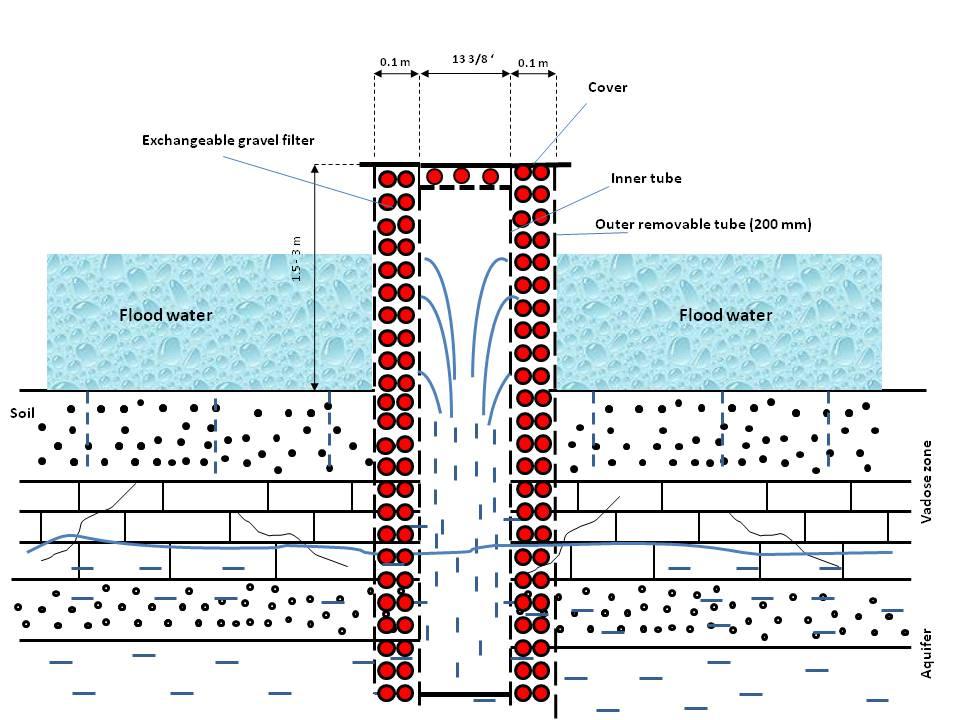
{'additional_translations': {}, 'content_type': 'image/jpeg', 'preview_image': '/media/2f/c/2fc74b1d-0d2d-4f44-89e8-cf176f34113f.jpg', 'key': 'Technical drawing', 'value': '/media/da/b/dab507cd-c465-4ed5-9130-3074acc70c38.jpg', 'template': 'raw'}
Author:

Ouessar M., Medenine, Tunisia

4.2 General information regarding the calculation of inputs and costs

other/ national currency (specify):

TND

If relevant, indicate exchange rate from USD to local currency (e.g. 1 USD = 79.9 Brazilian Real): 1 USD =:

1.3

Indicate average wage cost of hired labour per day:

10.00

4.3 Establishment activities

Activity Timing (season)
1. Drilling
2. Installation

4.4 Costs and inputs needed for establishment

Specify input Unit Quantity Costs per Unit Total costs per input % of costs borne by land users
Labour Labour ha 1.0 7000.0 7000.0
Construction material ha 1.0 1000.0 1000.0
Total costs for establishment of the Technology 8000.0
Total costs for establishment of the Technology in USD 6153.85
Comments:

Duration of establishment phase: 3 month(s)

4.5 Maintenance/ recurrent activities

Activity Timing/ frequency
1. Desilting of the filter Ounce in 1-3years (floods)
2. Repairs

4.6 Costs and inputs needed for maintenance/ recurrent activities (per year)

Specify input Unit Quantity Costs per Unit Total costs per input % of costs borne by land users
Labour Labour ha 1.0 500.0 500.0
Construction material ha 1.0 100.0 100.0
Total costs for maintenance of the Technology 600.0
Total costs for maintenance of the Technology in USD 461.54

4.7 Most important factors affecting the costs

Describe the most determinate factors affecting the costs:

Labour is the most determining factor affecting the costs.

5. Natural and human environment

5.1 Climate

Annual rainfall
  • < 250 mm
  • 251-500 mm
  • 501-750 mm
  • 751-1,000 mm
  • 1,001-1,500 mm
  • 1,501-2,000 mm
  • 2,001-3,000 mm
  • 3,001-4,000 mm
  • > 4,000 mm
Agro-climatic zone
  • arid

Thermal climate class: subtropics

5.2 Topography

Slopes on average:
  • flat (0-2%)
  • gentle (3-5%)
  • moderate (6-10%)
  • rolling (11-15%)
  • hilly (16-30%)
  • steep (31-60%)
  • very steep (>60%)
Landforms:
  • plateau/plains
  • ridges
  • mountain slopes
  • hill slopes
  • footslopes
  • valley floors
Altitudinal zone:
  • 0-100 m a.s.l.
  • 101-500 m a.s.l.
  • 501-1,000 m a.s.l.
  • 1,001-1,500 m a.s.l.
  • 1,501-2,000 m a.s.l.
  • 2,001-2,500 m a.s.l.
  • 2,501-3,000 m a.s.l.
  • 3,001-4,000 m a.s.l.
  • > 4,000 m a.s.l.
Indicate if the Technology is specifically applied in:
  • not relevant

5.3 Soils

Soil depth on average:
  • very shallow (0-20 cm)
  • shallow (21-50 cm)
  • moderately deep (51-80 cm)
  • deep (81-120 cm)
  • very deep (> 120 cm)
Soil texture (topsoil):
  • medium (loamy, silty)
Topsoil organic matter:
  • low (<1%)
If available, attach full soil description or specify the available information, e.g. soil type, soil PH/ acidity, Cation Exchange Capacity, nitrogen, salinity etc.

Soil fertility is very low
Soil drainage / infiltration is medium
Soil water storage is medium

5.4 Water availability and quality

Ground water table:

5-50 m

Availability of surface water:

poor/ none

Water quality (untreated):

poor drinking water (treatment required)

Is water salinity a problem?

Yes

Is flooding of the area occurring?

Yes

Regularity:

episodically

Comments and further specifications on water quality and quantity:

Seasonal fluctuations: Availability of surface water is poor/none but with periods of excess (e.g. flood)

5.5 Biodiversity

Species diversity:
  • medium
Habitat diversity:
  • low

5.6 Characteristics of land users applying the Technology

Sedentary or nomadic:
  • Sedentary
  • Semi-nomadic
Market orientation of production system:
  • mixed (subsistence/ commercial)
Off-farm income:
  • > 50% of all income
Relative level of wealth:
  • average
Individuals or groups:
  • employee (company, government)
Level of mechanization:
  • manual work
Gender:
  • men
Age of land users:
  • middle-aged
  • elderly
Indicate other relevant characteristics of the land users:

Population density: 10-50 persons/km2
Annual population growth: 0.5% - 1%
70% of the land users are average wealthy and own 75% of the land.

5.7 Average area of land used by land users applying the Technology

  • < 0.5 ha
  • 0.5-1 ha
  • 1-2 ha
  • 2-5 ha
  • 5-15 ha
  • 15-50 ha
  • 50-100 ha
  • 100-500 ha
  • 500-1,000 ha
  • 1,000-10,000 ha
  • > 10,000 ha
Is this considered small-, medium- or large-scale (referring to local context)?
  • small-scale

5.8 Land ownership, land use rights, and water use rights

Land ownership:
  • state
Land use rights:
  • communal (organized)
Water use rights:
  • communal (organized)
Comments:

The recharge wells are used to recharge the deep groundwater aquifers which are mainly exploited by the government agencies. However, private irrigated farms could benefit indirectly, by increased groundwater availability.

5.9 Access to services and infrastructure

health:
  • poor
  • moderate
  • good
education:
  • poor
  • moderate
  • good
technical assistance:
  • poor
  • moderate
  • good
employment (e.g. off-farm):
  • poor
  • moderate
  • good
markets:
  • poor
  • moderate
  • good
energy:
  • poor
  • moderate
  • good
roads and transport:
  • poor
  • moderate
  • good
drinking water and sanitation:
  • poor
  • moderate
  • good
financial services:
  • poor
  • moderate
  • good

6. Impacts and concluding statements

6.1 On-site impacts the Technology has shown

Socio-economic impacts

Water availability and quality

drinking water availability

decreased
increased

water availability for livestock

decreased
increased

irrigation water availability

decreased
increased

Socio-cultural impacts

SLM/ land degradation knowledge

reduced
improved

conflict mitigation

worsened
improved

Improved livelihoods and human well-being

decreased
increased
Comments/ specify:

Increased availability of water for drinking, agriculture and livestock

Ecological impacts

Water cycle/ runoff

harvesting/ collection of water

reduced
improved

groundwater table/ aquifer

lowered
recharge
Soil

salinity

increased
decreased
Other ecological impacts

risks of contamination of aquifers

decreased
increased

6.2 Off-site impacts the Technology has shown

water availability

decreased
increased

downstream flooding

increased
reduced
Comments/ specify:

In combination with gabion check dams

damage on public/ private infrastructure

increased
reduced
Comments/ specify:

In combination with gabion check dams

Surface water to reach downstream areas

decreased
increased

6.3 Exposure and sensitivity of the Technology to gradual climate change and climate-related extremes/ disasters (as perceived by land users)

Gradual climate change

Gradual climate change
Season increase or decrease How does the Technology cope with it?
annual temperature increase well

Climate-related extremes (disasters)

Meteorological disasters
How does the Technology cope with it?
local rainstorm well
local windstorm well
Climatological disasters
How does the Technology cope with it?
drought well

Other climate-related consequences

Other climate-related consequences
How does the Technology cope with it?
reduced growing period well
extreme floods not well

6.4 Cost-benefit analysis

How do the benefits compare with the establishment costs (from land users’ perspective)?
Short-term returns:

very positive

Long-term returns:

positive

How do the benefits compare with the maintenance/ recurrent costs (from land users' perspective)?
Short-term returns:

very positive

Long-term returns:

positive

Comments:

Long-term benefits are slightly reduced due to silting problems.

6.5 Adoption of the Technology

Of all those who have adopted the Technology, how many did so spontaneously, i.e. without receiving any material incentives/ payments?
  • 0-10%
Comments:

Comments on acceptance with external material support: It is solely constrcuted by the government agencies.

6.7 Strengths/ advantages/ opportunities of the Technology

Strengths/ advantages/ opportunities in the land user’s view
Replenishment of the aquifer

How can they be sustained / enhanced? Good selection of the site and drilling methods
Strengths/ advantages/ opportunities in the compiler’s or other key resource person’s view
Enhance groundwater level and quality (reduce salinity)

6.8 Weaknesses/ disadvantages/ risks of the Technology and ways of overcoming them

Weaknesses/ disadvantages/ risks in the land user’s view How can they be overcome?
Retain water for dowstreams users Proper watershed management plan
Weaknesses/ disadvantages/ risks in the compiler’s or other key resource person’s view How can they be overcome?
Silting up of the filter Maintenance of the filters.
Malfunction due to aquifer geometry and characteristics Good selection of the sites

7. References and links

7.1 Methods/ sources of information

  • compilation from reports and other existing documentation
When were the data compiled (in the field)?

10/06/2011

7.2 References to available publications

Title, author, year, ISBN:

Yahyaoui, H., Ouessar, M. 2000. Abstraction and recharge impacts on the ground water in the arid regions of Tunisia: Case of Zeuss-Koutine water table. UNU Desertification Series, 2: 72-78.

Available from where? Costs?

IRA, CRDA-Medenine, UNU

Title, author, year, ISBN:

Yahyaoui, H., Chaieb, H., Ouessar, M. 2002. Impact des travaux de conservation des eaux et des sols sur la recharge de la nappe de Zeuss-Koutine (Médenine: Sud-est tunisien). TRMP paper n° 40, Wageningen University, The Netherlands, pp: 71-86.

Available from where? Costs?

IRA, Wegeningen University (NL),

Title, author, year, ISBN:

Temmerman, S. 2004. Evaluation of the efficiency of recharge wells on the water supply to the water table in South Tunisia. Graduation dissertation, Ghent University, Belgium.

Available from where? Costs?

IRA, Gent University (BE)

Title, author, year, ISBN:

Genin, D., Guillaume, H., Ouessar, M., Ouled Belgacem, A., Romagny, B., Sghaier, M., Taamallah, H. (eds) 2006. Entre la désertification et le développement : la Jeffara tunisienne. CERES, Tunis, 351 pp.

Available from where? Costs?

IRA, IRD

Title, author, year, ISBN:

Ouessar M. 2007. Hydrological impacts of rainwater harvesting in wadi Oum Zessar watershed (Southern Tunisia). Ph.D. thesis, Faculty of Bioscience Engineering, Ghent University, Ghent, Belgium, 154 pp.

Available from where? Costs?

IRA, Gent University (BE)

Links and modules

Expand all Collapse all

Modules