

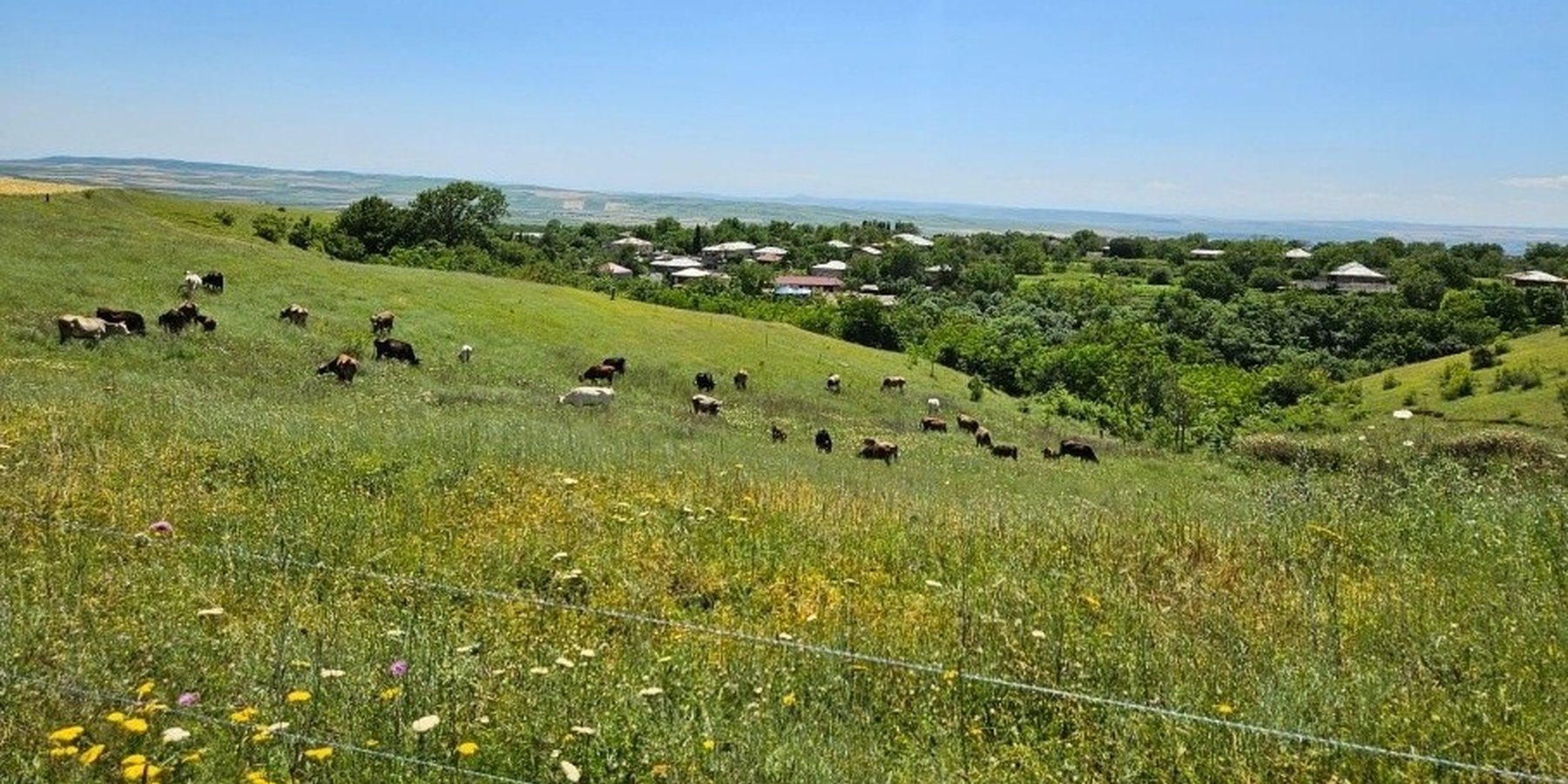
Controlled Grazing [จอร์เจีย]
- ผู้สร้างสรรค์:
- การอัพเดท:
- ผู้รวบรวม: Nicholas Euan Sharpe
- ผู้เรียบเรียง: –
- ผู้ตรวจสอบ: William Critchley, Rima Mekdaschi Studer
კონტროლირებადი ძოვება
technologies_7567 - จอร์เจีย
ดูส่วนย่อย
ขยายทั้งหมด ย่อทั้งหมด1. ข้อมูลทั่วไป
1.2 รายละเอียดที่ติดต่อได้ของผู้รวบรวมและองค์กรที่เกี่ยวข้องในการประเมินและการจัดเตรียมทำเอกสารของเทคโนโลยี
ชื่อของโครงการซึ่งอำนวยความสะดวกในการทำเอกสารหรือการประเมินเทคโนโลยี (ถ้าเกี่ยวข้อง)
Achieving Land Degradation Neutrality Targets of Georgia through Restoration and Sustainable Management of Degraded Pasturelands (GCP/GEO/006/GFF)ชื่อขององค์กรซึ่งอำนวยความสะดวกในการทำเอกสารหรือการประเมินเทคโนโลยี (ถ้าเกี่ยวข้อง)
Regional Environmental Centre for the Caucasus (REC Caucasus) - จอร์เจีย1.3 เงื่อนไขการใช้ข้อมูลที่ได้บันทึกผ่านทาง WOCAT
ผู้รวบรวมและวิทยากรหลักยอมรับเงื่อนไขเกี่ยวกับการใช้ข้อมูลที่ถูกบันทึกผ่านทาง WOCAT:
ใช่
1.4 การเปิดเผยเรื่องความยั่งยืนของเทคโนโลยีที่ได้อธิบายไว้
เทคโนโลยีที่ได้อธิบายไว้นี้เป็นปัญหาของความเสื่อมโทรมโทรมของที่ดินหรือไม่ จึงไม่ได้รับการยอมรับว่าเป็นเทคโนโลยีเพื่อการจัดการที่ดินอย่างยั่งยืน:
ไม่ใช่
1.5 Reference to Questionnaire(s) on SLM Approaches (documented using WOCAT)
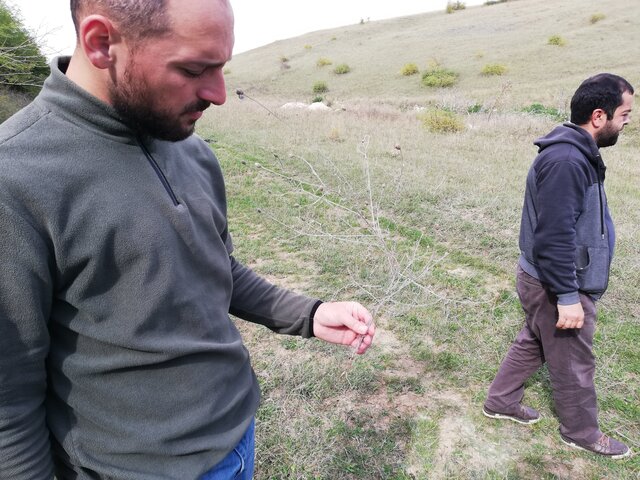
Participatory Grassland and Rangeland Assessment (PRAGA) [จอร์เจีย]
The Participatory Rangelands and Grasslands Assessment Methodology (PRAGA) is a rapid, cost-effective framework for the integrated assessment of rangeland ecosystems, incorporating diverse data sources and participatory approaches. PRAGA facilitates stakeholder engagement through consultations and workshops, underpinned by community-based mapping of grazing areas, land use dynamics, and trend analyses.
- ผู้รวบรวม: Nicholas Euan Sharpe
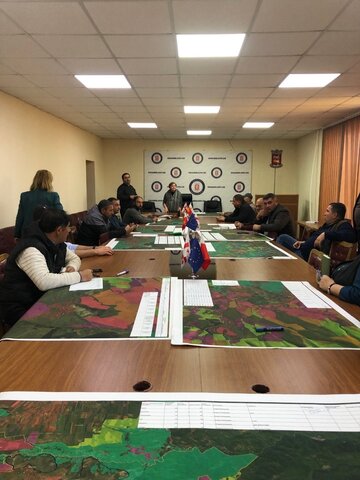
Municipal Pastureland Planning [จอร์เจีย]
The Municipal Pastureland Planning approach was developed collaboratively with key national and local stakeholders to establish a structured, evidence-based decision support framework for sustainable rangeland governance. This system consolidates and presents data from diverse stakeholder groups in a format fully compatible with the Land Degradation Neutrality Framework, ensuring that planning …
- ผู้รวบรวม: Nicholas Euan Sharpe
2. การอธิบายลักษณะของเทคโนโลยี SLM
2.1 การอธิบายแบบสั้น ๆ ของเทคโนโลยี
คำจำกัดความของเทคโนโลยี:
“Controlled Grazing” seeks to harness the behaviours and habits of ruminant livestock to enhance three key ecological functions, namely the removal of plant biomass (grazing), soil and vegetation disturbance (animal impact) and increased nutrient cycling (dung and urine), with the goal of increasing perennial grass establishment, pasture palatability and reducing bare ground and erosion.
2.2 การอธิบายแบบละเอียดของเทคโนโลยี
คำอธิบาย:
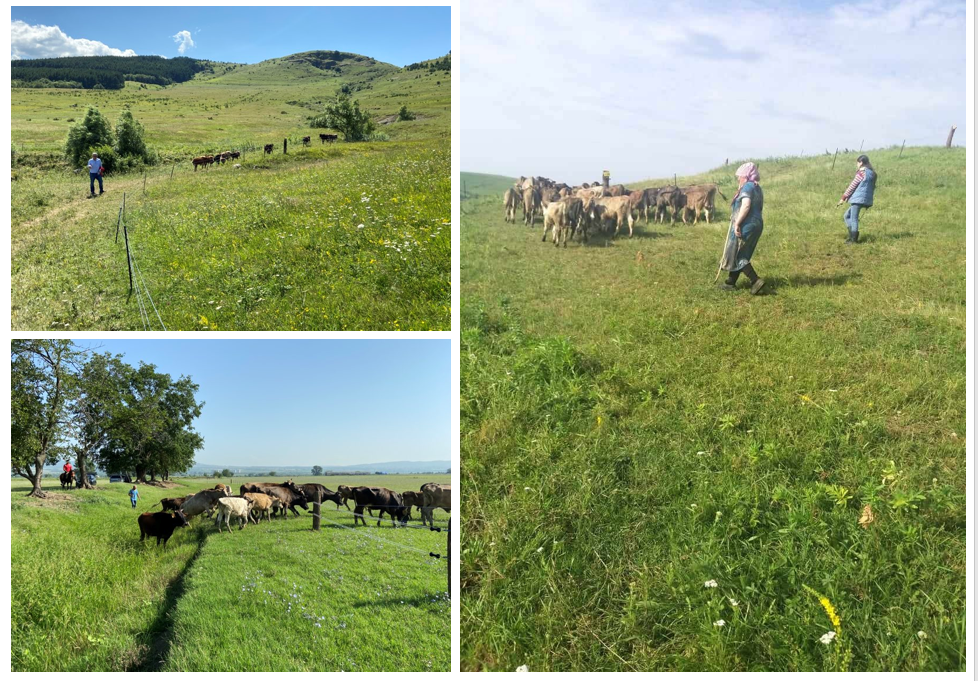
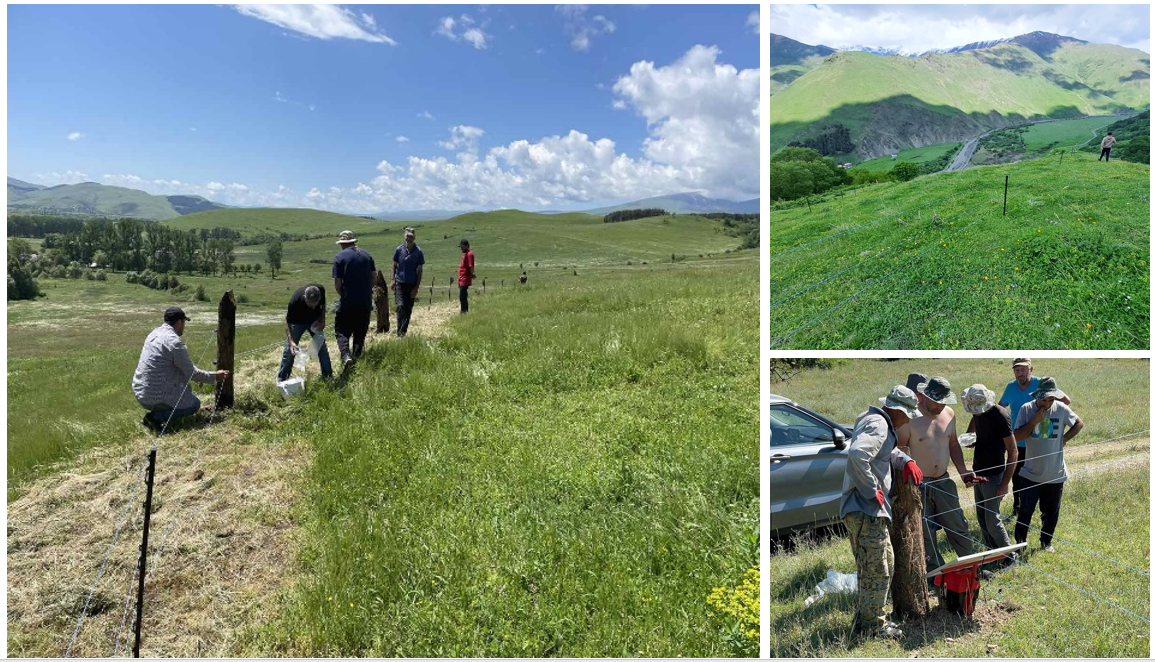
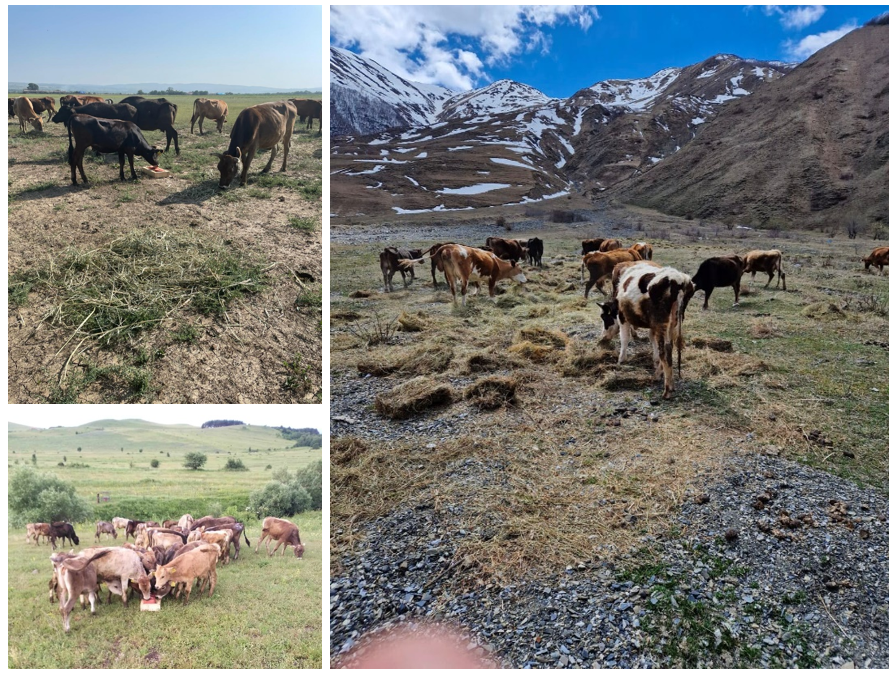
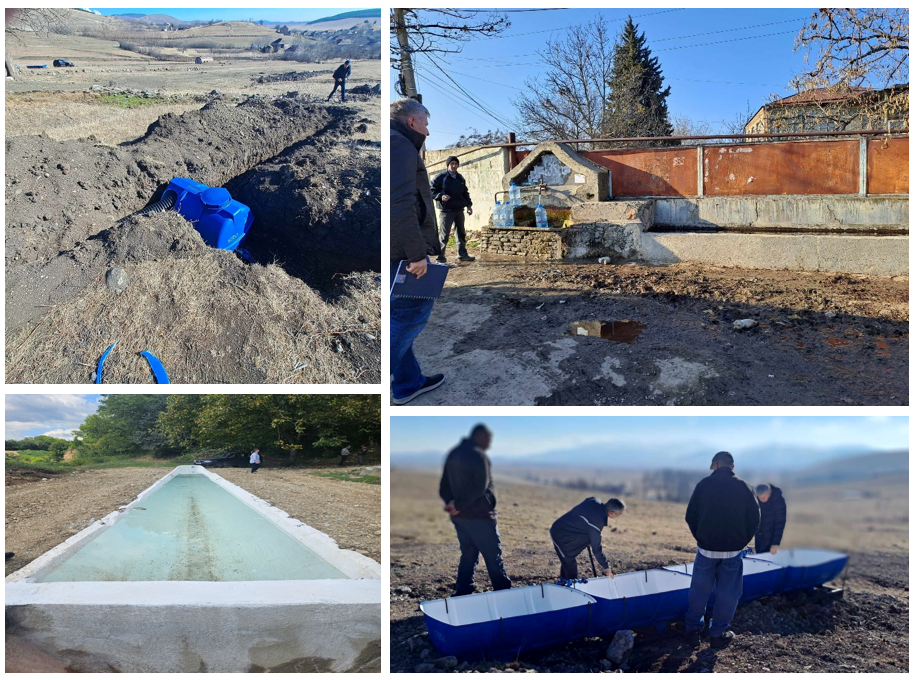
“Controlled Grazing” (CG) was developed and then implemented in three municipalities on a total of 564 ha of pastureland. With support from local land users, pasture areas within the three pilot sites were divided into paddocks of roughly 1 to 10 ha in size; an overall stocking rate of 1.9 ha per standard animal unit (SAU) and a maximum capacity of 400 SAU were used for infrastructure design. To optimise control of grazing rest/recovery times and intensities, complementary project interventions included fencing, water point development, agroforestry, installation of shade structures and use of hay and salt/mineral licks, as well as capacity building among herders. Electric fences were chosen over other fencing options or herding due to cost and ease of maintenance; the system was based on constructing permanent end-post and gate structures and then installing 2 to 3 strands of electrified wire at the beginning of the grazing season, and removing and storing equipment at the end of the grazing season. Water storage installations were designed to provide reliable sources of water in sufficient quantities to meet peak stocking capacity (400 SAU); design of the water trough and delivery systems sought mobility within the paddock space to reduce trampling and soil compaction around water points. Shade structures complemented the agroforestry additions, provided shading options to livestock while the trees were young. "Attractants" (hay, salt licks etc.) also proved highly efficient at concentrating animal impact on specific sites, especially areas of salt scald and bare ground.
Grazing planning used recovery times based on actual seasonal growth rates. The first grazing plans were developed with support from project experts, but management was transferred early in the process to local herders. The project conducted field-based monitoring of pasture health and soil conditions from 2019 to 2025, structured through the PRAGA field data survey sheets (see the PRAGA approach in the WOCAT database). These findings were analysed through a project-developed analysis worksheet with land users to determine how management practices were impacting the pasture and soil surface.
The project "Achieving Land Degradation Neutrality Targets of Georgia through Restoration and Sustainable Management of Degraded Pasturelands" (GCP/GEO/006/GFF) was responsible for the initial investment of USD 120,800, or approximately USD 215 per ha, to develop the livestock infrastructure. Local land users are expected to cover the estimated annual maintenance costs of USD 900. The pilot pastures have traditionally been used by livestock owners for dairy cows and smallstock; these pastures were transferred to municipalities for a lease period of 15 years through project support.
CG shares conceptual links with other regenerative grazing models (see references at the end of the document) and reframes ruminant herbivores as ecological tools facilitating grassland function and biodiversity. In this particular case, local reactions were overwhelmingly positive, resulting in new professionals entering the livestock sector and tangible improvements in forage quality, pasture productivity and livestock performance. A better understanding of pasture management and planning has reduced conflict and adoption has allowed communities as a whole to reflect on land management, herd genetics, economic viability and the role of livestock in the landscape. CG has also played a pivotal role in securing formal recognition and rights for land users, and leverages a resource and technology that are already widely available in Georgia’s rural communities. Controlled Grazing offers a grounded, regenerative technology that can revitalise grassland productivity and ecological function.
2.3 รูปภาพของเทคโนโลยี
อัลบั้มสื่อบันทึก
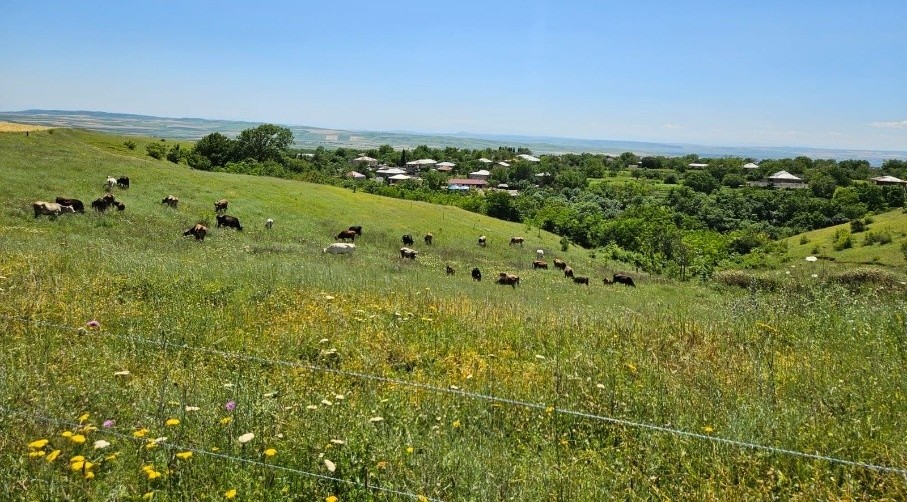
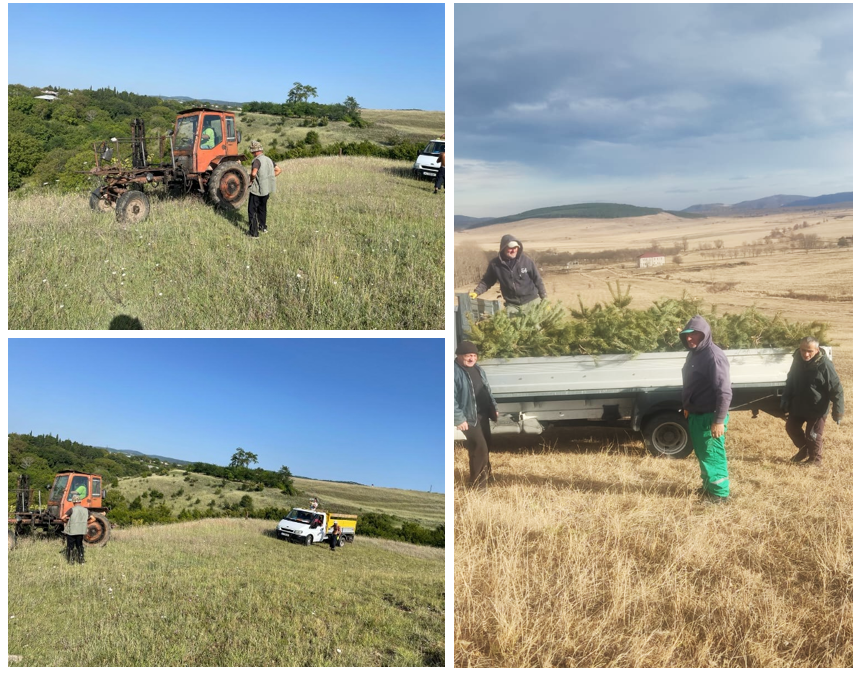
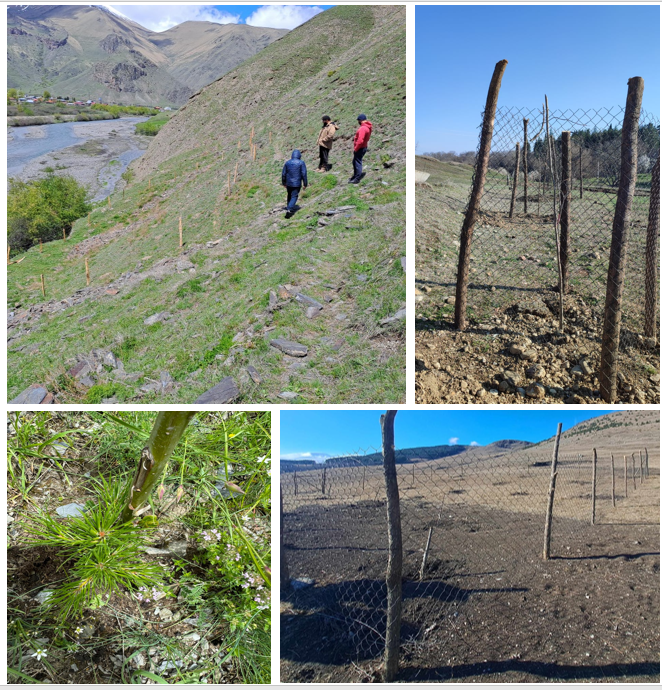
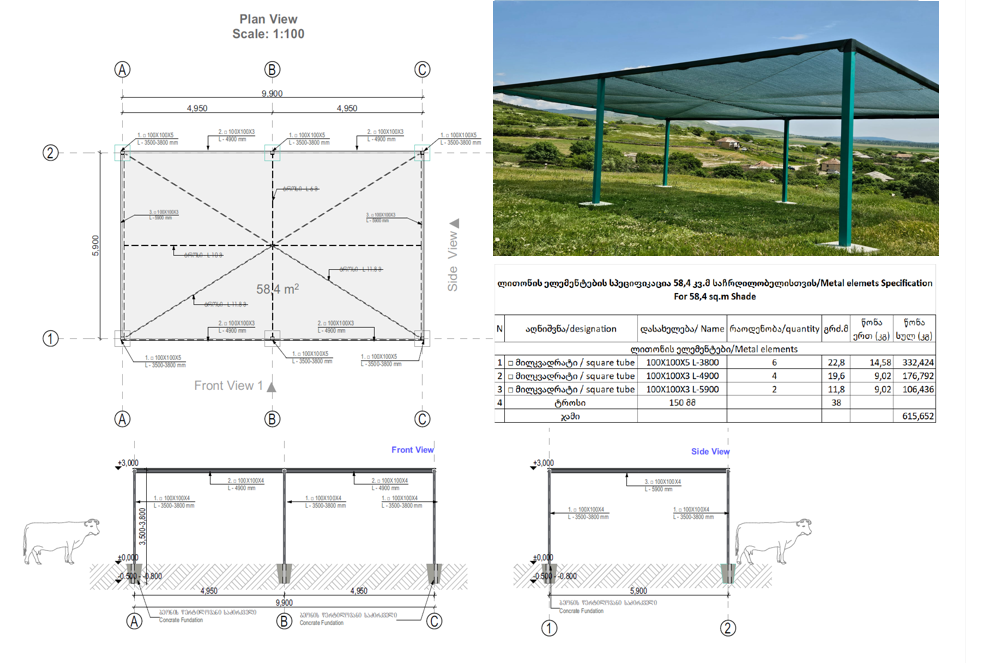
คำอธิบายภาพ:
The photos provided give an overview of the different environmental context where the technology was deployed, in addition to the infrastructure investments and supporting activities that allowed for grazing animals, times and intensities to be managed.
2.5 ประเทศภูมิภาค หรือสถานที่ตั้งที่เทคโนโลยีได้นำไปใช้และได้รับการครอบคลุมโดยการประเมินนี้
ประเทศ:
จอร์เจีย
ภูมิภาค/รัฐ/จังหวัด:
Dmanisi, Gurjaani and Kazbegi Municipalities
ข้อมูลจำเพาะเพิ่มเติมของสถานที่ตั้ง :
Villages of Ganakleba & Naniani, Sno
ระบุการกระจายตัวของเทคโนโลยี:
- กระจายไปอย่างสม่ำเสมอในพื้นที่
If precise area is not known, indicate approximate area covered:
- 1-10 ตร.กม.
Is/are the technology site(s) located in a permanently protected area?
ไม่ใช่
แสดงความคิดเห็น:
The project collaborated with three village-level stakeholder groups to develop and pilot Controlled Grazing. Investments in grazing infrastructure, training, equipment, and management support systems were integral to the successful implementation of the approach.
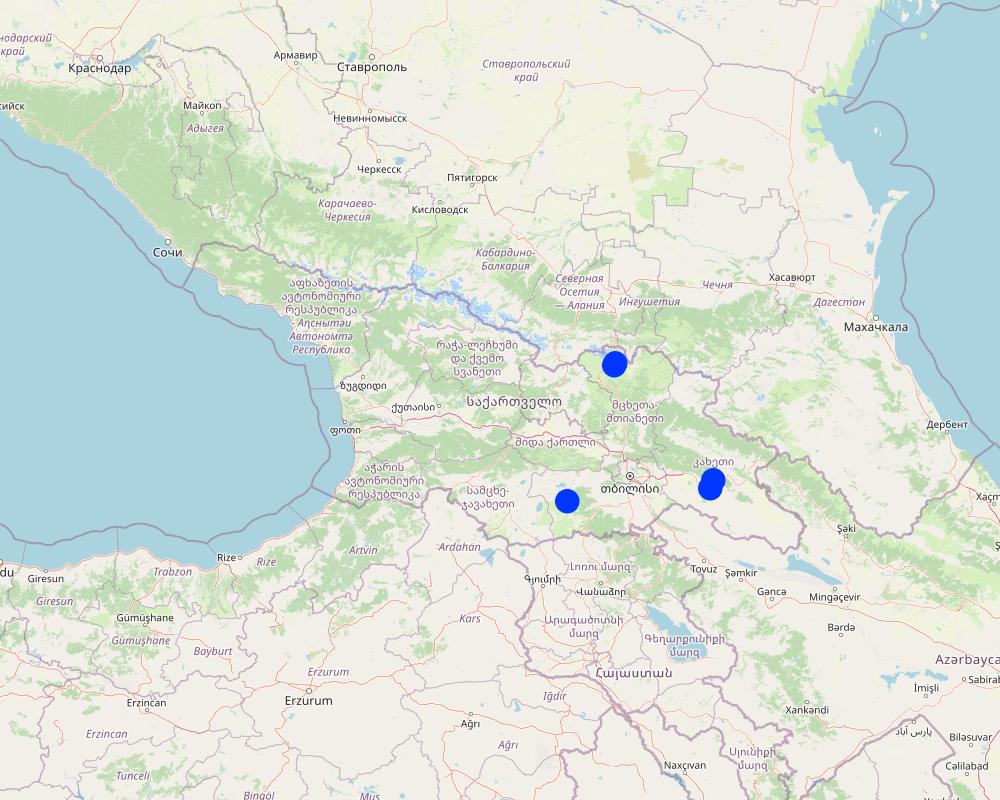
Map
×2.6 วันที่การดำเนินการ
ระบุปีที่ใช้:
2024
ถ้าไม่รู้ปีที่แน่นอน ให้ระบุวันที่โดยประมาณ:
- น้อยกว่า 10 ปี (ไม่นานนี้)
2.7 คำแนะนำของเทคโนโลยี
ให้ระบุว่าเทคโนโลยีถูกแนะนำเข้ามาอย่างไร:
- ทางโครงการหรือจากภายนอก
ความคิดเห็น (ประเภทของโครงการ เป็นต้น) :
The introduction of the technology was financed and supervised by the GCF/GEO/006/GFF project through the implementing partner Regional Environmental Centre for the Caucasus (REC Caucasus).
3. การจัดประเภทของเทคโนโลยี SLM
3.1 วัตถุประสงค์หลักของเทคโนโลยี
- ปรับปรุงการผลิตให้ดีขึ้น
- ลด ป้องกัน ฟื้นฟู การเสื่อมโทรมของที่ดิน
- รักษาสภาพหรือปรับปรุงความหลากหลายทางชีวภาพ
- สร้างผลกระทบทางด้านเศรษฐกิจที่เป็นประโยชน์
- สร้างผลกระทบทางด้านสังคมที่เป็นประโยชน์
3.2 ประเภทของการใช้ที่ดินในปัจจุบันที่ได้นำเทคโนโลยีไปใช้
Land use mixed within the same land unit:
ใช่
Specify mixed land use (crops/ grazing/ trees):
- ปศุสัตว์ร่วมกับการทำป่าไม้ (Silvo-pastoralism)
ทุ่งหญ้าเลี้ยงสัตว์
ทุ่งหญ้าเลี้ยงสัตว์ที่มีการจัดการแบบเข้มข้นหรือการผลิตอาหารสัตว์:
- ทุ่งหญ้าเลี้ยงสัตว์ที่ได้มีการปรับปรุง (Improved pastures)
Animal type:
- cattle - dairy
- cattle - non-dairy beef
- sheep
Is integrated crop-livestock management practiced?
ไม่ใช่
ผลิตภัณฑ์และบริการ:
- meat
- milk
- whool
Species:
cattle - dairy
Count:
400
แสดงความคิดเห็น:
Forests are occasionally used by the livestock as shelter from the elements and as a place for calving/ lambing; tree planting will provide shade and erosion control.
3.3 Has land use changed due to the implementation of the Technology?
Has land use changed due to the implementation of the Technology?
- No (Continue with question 3.4)
3.4 การใช้น้ำ
การใช้น้ำของที่ดินที่มีการใช้เทคโนโลยีอยู่:
- จากน้ำฝน
3.5 กลุ่ม SLM ที่ตรงกับเทคโนโลยีนี้
- การปลูกป่าร่วมกับพืช
- การจัดการปศุสัตว์และทุ่งหญ้าเลี้ยงสัตว์
- การปรับปรุงดิน / พืชคลุมดิน
3.6 มาตรการ SLM ที่ประกอบกันเป็นเทคโนโลยี
มาตรการอนุรักษ์ด้วยวิธีพืช
- V1: ต้นไม้และพุ่มไม้คลุมดิน
- V2: หญ้าและไม้ยืนต้น
- V4: การแทนที่หรือการนำพันธุ์ต่างถิ่น/ที่รุกล้ำเข้ามา ออกไปจากพื้นที่
- V5: อื่นๆ
มาตรการอนุรักษ์ด้วยโครงสร้าง
- S6: กำแพง สิ่งกีดขวาง รั้วไม้ รั้วต่างๆ
- S7: การกักเก็บน้ำ/การส่งลำเลียง/อุปกรณ์การชลประทาน
- S9: ที่พักพิงสำหรับพืชและสัตว์

มาตรการอนุรักษ์ด้วยการจัดการ
- M2: การเปลี่ยนแปลงของการจัดการหรือระดับความเข้มข้น
- M3: การวางผังตามสิ่งแวดล้อมทางธรรมชาติและสิ่งแวดล้อมของมนุษย์
- M4: การเปลี่ยนแปลงช่วงเวลาให้เหมาะแก่การทำกิจกรรม

มาตรการอื่น ๆ
ระบุ:
Placement of attractants to focus grazing pressures and camping of livestock, including hay feeding which acted additionally to cover bare ground areas and salt scalds.
3.7 รูปแบบหลักของการเสื่อมโทรมของที่ดินที่ได้รับการแก้ไขโดยเทคโนโลยี
การกัดกร่อนของดินโดยน้ำ
- Wt (Loss of topsoil): การสูญเสียดินชั้นบนหรือการกัดกร่อนที่ผิวดิน
- Wg (Gully erosion): การกัดกร่อนแบบร่องธารหรือการทำให้เกิดร่องน้ำเซาะ
- Wm (Mass movement): การเคลื่อนตัวของมวลดินหรือดินถล่ม

การเสื่อมโทรมของดินทางด้านเคมี
- Cs (Salinization/alkalinization): การสะสมเกลือหรือการทำให้เป็นด่าง

การเสื่อมโทรมของดินทางด้านกายภาพ
- Pc (Compaction): การอัดแน่น
- Pk (Slaking and crusting): การอุดตันของช่องว่างในดินหรือรูพรุน
- Pu (Loss of bio-productive function): การสูญเสียหน้าที่การผลิตทางชีวภาพอันเนื่องมาจากกิจกรรม อื่นๆ

การเสื่อมโทรมของดินทางด้านชีวภาพ
- Bc (Reduction of vegetation cover): การลดลงของจำนวนพืชที่ปกคลุมดิน
- Bh (Loss of habitat): การสูญเสียแหล่งที่อยู่
- Bq (Quantity/biomass decline): การลดลงของปริมาณหรือมวลชีวภาพ
- Bs (Quality and species composition): องค์ประกอบหรือความหลากหลายทางคุณภาพและชนิดพันธุ์ลดลง
3.8 การป้องกัน การลดลง หรือการฟื้นฟูความเสื่อมโทรมของที่ดิน
ระบุเป้าหมายของเทคโนโลยีกับความเสื่อมโทรมของที่ดิน:
- ป้องกันความเสื่อมโทรมของที่ดิน
- ลดความเสื่อมโทรมของดิน
แสดงความคิดเห็น:
According to the Land Degradation Neutrality (LDN) Conceptual Framework, the highest priority is to maintain and enhance existing productive land use systems, as these are essential for ensuring both ecological integrity and food security. The second priority is to reduce ongoing land degradation, while the third focuses on restoring severely degraded lands. In alignment with this framework, the project aimed to improve pasture quality to support rural livelihoods and prevent further degradation of Georgia’s communally managed grasslands. This was achieved through multi-layered planning approaches designed to operationalize the LDN Framework at both local and municipal levels. For more details, please see the Municipal Pasture Planning and the PRAGA Approach links at the end of this document.
4. ข้อมูลจำเพาะด้านเทคนิค กิจกรรมการนำไปปฏิบัติใช้ ปัจจัยนำเข้า และค่าใช้จ่าย
4.1 แบบแปลนทางเทคนิคของเทคโนโลยี
ข้อมูลจำเพาะด้านเทคนิค (แบบแปลนทางเทคนิคของเทคโนโลยี):
Grazing charts serve as visual tools to represent the planned movement of livestock through specific areas of land (paddocks) over time. These charts offer a detailed and integrated planning framework that consolidates a wide range of variables into a single, easy-to-understand visual format. These include the timing and intensity of grazing, the size and condition of paddock areas, required plant recovery periods under varying growth conditions, wildlife and biodiversity considerations, seasonal constraints such as forage availability, and risks such as fire, drought or frost. Other land use factors can also be incorporated into the charting process.
For this project, the Holistic Planned Grazing Control Chart developed by the Savory Institute (www.savory.global) was translated and applied with their permission. The chart became a central tool for engaging land users in discussions around herd composition and size, recovery periods, and other fundamental grazing management principles. It helped facilitate more informed decision-making and supported the introduction of regenerative grazing practices aligned with both ecological and livelihood priorities.
ผู้เขียน:
The Savory Institute (translated by the Regional Environmental Centre for the Caucasus (REC Caucasus)
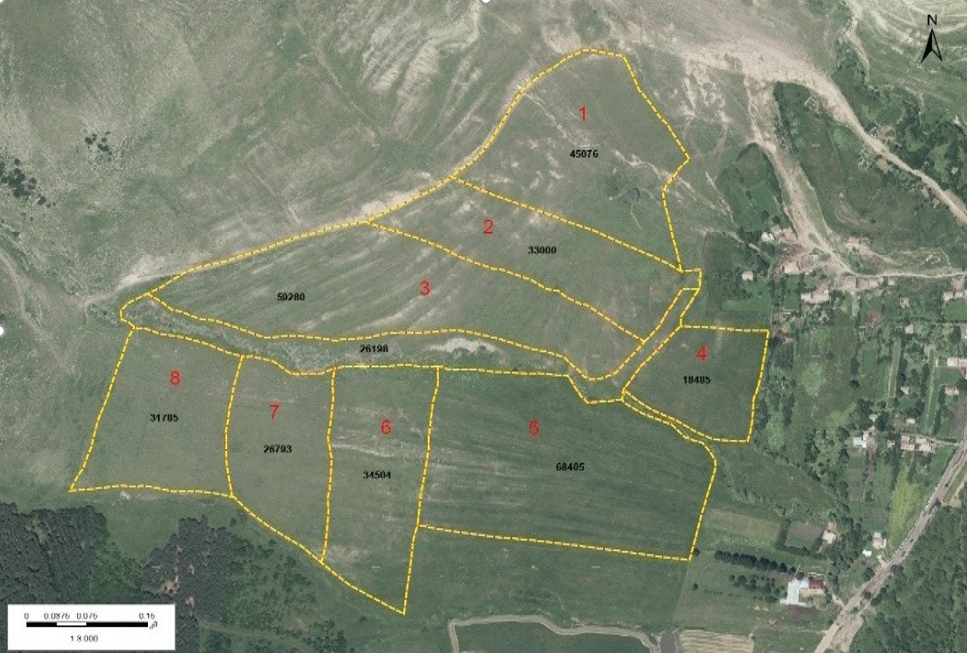
ข้อมูลจำเพาะด้านเทคนิค (แบบแปลนทางเทคนิคของเทคโนโลยี):
This image showcasing Ganakhleba, Dmanisi provides just one example of how the paddock divisions were established on project pilot sites to manage grazing. These divisions were created using electric fencing and fixed and mobile watering troughs. Agroforestry plantings were introduced within the pilot site for shade and erosion control. Weed and pest control included removal of pine seedlings and ant mounds. Grazing rotations were incorporated into other management calendars allowing for increased efficiency in forage conversion and utilisation of crop residues and other grazing opportunities.
ผู้เขียน:
Regional Environmental Centre for the Caucasus (REC Caucasus)
วันที่:
01/03/2023
4.2 ข้อมูลทั่วไปเกี่ยวกับการคำนวณปัจจัยนำเข้าและค่าใช้จ่าย
ให้ระบุว่าค่าใช้จ่ายและปัจจัยนำเข้าได้รับการคำนวณอย่างไร:
- ต่อพื้นที่ที่ใช้เทคโนโลยี
ระบุขนาดและหน่วยพื้นที่:
3 sites totalling 564 ha
ระบุสกุลเงินที่ใช้คำนวณค่าใช้จ่าย:
- USD
ระบุค่าเฉลี่ยของค่าจ้างในการจ้างแรงงานต่อวัน:
25 USD per day
4.3 กิจกรรมเพื่อการจัดตั้ง
| กิจกรรม | Timing (season) | |
|---|---|---|
| 1. | Gather support among land users (especially complex for communal lands) | N/A |
| 2. | Gain the necessary support from decision makers and relevant stakeholder groups | N/A |
| 3. | Obtain the required permissions and rights of use for grazing | N/A |
| 4. | Calculate peak water and forage needs for herds | N/A |
| 5. | Obtain funding and/or monetary contribution system to finance infrastructure investments | N/A |
| 6. | Develop source and water distribution system | When soil is workable (not too dry or too wet) |
| 7. | Install fencing systems and/or establish herding protocols | Weather permitting |
| 8. | Work with land users and stakeholders to define objectives using for grazing as a tool and describe the land as it should be in the future | N/A |
| 9. | Work with experts to develop initial grazing calendar (ensure adequate recovery periods following grazing) | Before growing season |
| 10. | Introduce herds | At onset of growing season, or when required if grazing land is scarce |
| 11. | Utlilise grazing feedback and monitoring protocols to adjust animal numbers and grazing times | Over course of growing season |
| 12. | At onset of non-growing season, calculate standing forage and animal numbers and adjust to ensure quality forage is available until the next growing season | At onset of non-growing season or times of very slow growth |
| 13. | Use information at onset of non-growing season to develop non-growing season grazing plan, including options for prolonged drought periods | At onset of non-growing season |
| 14. | Once grass or forage growth resumes, use last season's grazing plan to plan grazing for current growing season | At onset of growing season |
แสดงความคิดเห็น:
Rarely do all land users or communities commit at early stages to implement a grazing system that requires planning and coordination among livestock owners. Therefore, specific areas were set aside for the pilot demonstrations. It must be kept in mind that small pilot plot areas rarely involve the degree of planning, coordination and infrastructure development that will be needed to apply these systems at scale. When livestock are used as regenerative tools, observation and monitoring is needed to ensure that plants are given adequate recovery times following grazing (this concept is less important during the non-growing season as grass is dormant); everything else described above is developed to support this basic process of grazing-recovery-monitoring-planning.
4.4 ค่าใช้จ่ายของปัจจัยนำเข้าที่จำเป็นสำหรับการจัดตั้ง
| ปัจจัยนำเข้า | หน่วย | ปริมาณ | ค่าใช้จ่ายต่อหน่วย | ค่าใช้จ่ายทั้งหมดต่อปัจจัยนำเข้า | %ของค่าใช้จ่ายที่ก่อให้เกิดขึ้นโดยผู้ใช้ที่ดิน | |
|---|---|---|---|---|---|---|
| แรงงาน | Preparation of Detailed (Technical) Design, BoQ for Pastures Watering System Arrangements | days of labour | 63.0 | 150.0 | 9450.0 | |
| แรงงาน | Fencing installation (grazing divisions) | days of labour | 150.0 | 30.0 | 4500.0 | 10.0 |
| แรงงาน | Training land users electric fencing installation, maintenance | days of labour | 10.0 | 70.0 | 700.0 | |
| แรงงาน | Agroforestry ground preparation, fencing and planting | days of labour | 80.0 | 25.0 | 2000.0 | |
| แรงงาน | Installation of water storage and distribution systems | days of labour | 90.0 | 25.0 | 2250.0 | |
| แรงงาน | Village water trough rehabilitation / construction | days of labour | 30.0 | 25.0 | 750.0 | |
| แรงงาน | Shading structure installation | days of labour | 35.0 | 25.0 | 875.0 | |
| แรงงาน | Tractor + truck work (weed removal / water system / soil admendments) | days of labour | 22.0 | 50.0 | 1100.0 | |
| อุปกรณ์ | Fencing equipment (gates, corner posts, cement, straining wire, electric fence energisers, galvanised wire, poles, insulators, voltage testers, high voltage wire, batteries, etc) | $325 per ha average for 3 sites | 110.0 | 326.0 | 35860.0 | |
| อุปกรณ์ | Water tanks, pipes, drinking troughs, floats, values, etc | $292 per ha avg | 564.0 | 62.0 | 34968.0 | |
| อุปกรณ์ | Protective fencing for agroforestry (posts, chain-link fencing) | rolls of 25 metres + 100 wooden posts | 12.0 | 250.0 | 3000.0 | |
| อุปกรณ์ | Design and construction of tractor mounted ant mound leveller (recycled materials) | unit | 1.0 | 250.0 | 250.0 | |
| อุปกรณ์ | Salt / Mineral block holder | units | 10.0 | 30.0 | 300.0 | |
| วัสดุด้านพืช | Seedlings / Saplings (multispecies) | saplings | 334.0 | 24.0 | 8016.0 | |
| วัสดุด้านพืช | Hay (small bale, avg. 20 kilos) | hay bales | 30.0 | 5.0 | 150.0 | |
| ปุ๋ยและสารฆ่า/ยับยั้งการเจริญเติบโตของสิ่งมีชีวิต (ไบโอไซด์) | Effective Microorganisms (EM) | L bag/box | 120.0 | 10.0 | 1200.0 | |
| ปุ๋ยและสารฆ่า/ยับยั้งการเจริญเติบโตของสิ่งมีชีวิต (ไบโอไซด์) | Vegetation recovery support measures, (Alfalfa seed) | kg | 150.0 | 9.0 | 1350.0 | |
| วัสดุสำหรับก่อสร้าง | Construction materials for fixed, village watering points | per water trough | 9.0 | 1000.0 | 9000.0 | |
| วัสดุสำหรับก่อสร้าง | Construction of shading structures | per structure | 2.0 | 1956.0 | 3912.0 | |
| อื่น ๆ | Contract of heavy machinery for ant mound removal | hours | 160.0 | 30.0 | 4800.0 | |
| อื่น ๆ | Contract of tractor and trailer for week removal | hours | 89.0 | 30.0 | 2670.0 | |
| อื่น ๆ | Livestock Salt / Mineral blocks | units | 50.0 | 8.0 | 400.0 | |
| อื่น ๆ | Holistic Planned Grazing Charts in Georgian (www.savory.global) | A2 printed chart | 10.0 | 30.0 | 300.0 | |
| ค่าใช้จ่ายทั้งหมดของการจัดตั้งเทคโนโลยี | 127801.0 | |||||
| Total costs for establishment of the Technology in USD | 127801.0 | |||||
ถ้าผู้ใช้ที่ดินรับภาระน้อยกว่า 100% ของค่าใช้จ่าย ให้ระบุว่าใครเป็นผู้รับผิดชอบส่วนที่เหลือ:
The Project 'Achieving Land Degradation Neutrality Targets of Georgia through Restoration and Sustainable Management of Degraded Pasturelands (GCP/GEO/006/GFF)'
แสดงความคิดเห็น:
While some labour support was provided by land users, the funding both for labour and materials was principally provided by the GCP/GEO/006/GFF Project
4.5 การบำรุงรักษาสภาพหรือกิจกรรมที่เกิดขึ้นเป็นประจำ
| กิจกรรม | ช่วงระยะเวลา/ความถี่ | |
|---|---|---|
| 1. | Herding / driving / penning of livestock the paddocks | Every morning |
| 2. | Driving livestock to the village and shedding for afternoon milking | Every evening |
| 3. | Electric fence inspection and maintenance | Every 2 days charge and upkeep of fencing around perimeter needs to be checked |
| 4. | Water point inspection and maintenance | Every day, especially during cold periods under 0º C |
| 5. | Assessment of pasture condition and updating of grazing plans | Every week or when changes to plan are required |
| 6. | Inspection and maintenance of other infrastructure (agroforesty fencing, shading structures) | Every week |
| 7. | Ecological monitoring (i.e. PRAGA field sample sheets, photo library) | Every 3 to 6 months |
| 8. | Pasture user group discussions and completion of 'Annual Grazing Action Plan' and Grazing Planning charts | Annually before growing season. Additionally before start of non-growing season to measure standing forage |
| 9. | Weed and pest control | Every 3, preferably when undesirable species are at their most vulnerable stage in life cycle |
| 10. | Soil amendments (liming, Enhanced microbes, deep ripping, compost tea) | When required, always following cost-benefits analysis |
แสดงความคิดเห็น:
Once properly installed and maintained, the infrastructure should require minimal additional investment. Sustaining and enhancing productivity gains depends primarily on regular monitoring—specifically, weekly pasture condition assessments and timely updates to the grazing planning charts. These actions ensure that plant recovery periods are respected, ground cover is maintained and that the composition of pasture species continues to evolve toward the agreed-upon goals set by land users and pasture managers.
4.6 ค่าใช้จ่ายของปัจจัยนำเข้าและกิจกรรมที่เกิดขึ้นเป็นประจำที่ต้องการการบำรุงรักษา (ต่อปี)
| ปัจจัยนำเข้า | หน่วย | ปริมาณ | ค่าใช้จ่ายต่อหน่วย | ค่าใช้จ่ายทั้งหมดต่อปัจจัยนำเข้า | %ของค่าใช้จ่ายที่ก่อให้เกิดขึ้นโดยผู้ใช้ที่ดิน | |
|---|---|---|---|---|---|---|
| แรงงาน | Inspection of infrastructure (fencing, water, agroforestry, shading, etc) | days of labour (per month) | 3.0 | 25.0 | 75.0 | 100.0 |
| แรงงาน | Repair of fencing and other infrastructure | days of labour (monthly) | 4.0 | 50.0 | 200.0 | 100.0 |
| แรงงาน | Weed and Pest control | days of labour (per month) | 4.0 | 25.0 | 100.0 | 100.0 |
| แรงงาน | Inspection of pasture condition | days of labour (per month) | 2.0 | 25.0 | 50.0 | 100.0 |
| แรงงาน | Pasture / land user group meetings and planning | event | 4.0 | 75.0 | 300.0 | 100.0 |
| แรงงาน | Soil amendments | days of labour (per month) | 1.0 | 30.0 | 30.0 | 100.0 |
| แรงงาน | Ecological Monitoring | days of labour (per month) | 1.0 | 25.0 | 25.0 | 100.0 |
| อุปกรณ์ | Infrastructure repairs (fencing, water, other) | parts (monthly avg.)) | 2.0 | 50.0 | 100.0 | 100.0 |
| อุปกรณ์ | Replacement of tools (depreciation) | hand tools (monthly depreciation costs) | 2.0 | 5.0 | 10.0 | 100.0 |
| ปุ๋ยและสารฆ่า/ยับยั้งการเจริญเติบโตของสิ่งมีชีวิต (ไบโอไซด์) | Soil amendments | misc. (monthly) | 2.0 | 5.0 | 10.0 | 100.0 |
| ค่าใช้จ่ายทั้งหมดของการบำรุงรักษาสภาพเทคโนโลยี | 900.0 | |||||
| Total costs for maintenance of the Technology in USD | 900.0 | |||||
แสดงความคิดเห็น:
Maintenance and other operating costs estimated here do not take into consideration time moving animals from milking sheds/barns to the grazing areas.
4.7 ปัจจัยสำคัญที่สุดที่มีผลกระทบต่อค่าใช้จ่าย
ปัจจัยสำคัญที่สุดที่มีผลกระทบต่อค่าใช้จ่ายต่างๆ:
While the technologies described here offer substantial benefits, their implementation costs may be prohibitive for communally managed lands without subsidized external support. However, a range of low-cost strategies can still create the desired grazing conditions, supporting plant recovery, herd effect, and beneficial animal impact. These include herding, the use of dogs, mobile water points, attractants, and more flexible mobile electric fencing systems, which can be established at a fraction of the cost outlined in this approach.
Nonetheless, some level of initial investment, whether in labour, materials, or in-kind contributions, is generally required to implement context-appropriate solutions for water access, herd control, and predator protection, particularly when livestock are kept in open-air or mobile enclosures.
In more densely populated areas, the installation of well-designed, durable perimeter fencing is strongly recommended to reduce conflict with other community members, especially where pasturelands border horticultural or cropping areas. With secure boundaries in place, internal management can rely on lower-cost tools such as mobile electric fencing or strategic herding. This setup not only enhances grazing control and herd management but also provides flexibility for future expansion, including the phased addition of water and shade infrastructure.
A key factor in implementation success is the willingness of contractors or community members to undertake fencing and tree planting on steep or difficult terrain. In several cases, contractors initially willing to bid later declined once the full extent of the site conditions was clarified.
5. สิ่งแวดล้อมทางธรรมชาติและของมนุษย์
5.1 ภูมิอากาศ
ฝนประจำปี
- < 250 ม.ม.
- 251-500 ม.ม.
- 501-750 ม.ม.
- 751-1,000 ม.ม.
- 1,001-1,500 ม.ม.
- 1,501-2,000 ม.ม.
- 2,001-3,000 ม.ม.
- 3,001-4,000 ม.ม.
- > 4,000 ม.ม.
ข้อมูลจำเพาะ/ความคิดเห็นเรื่องปริมาณน้ำฝน:
Annual precipitation varies considerably across the three municipalities, from 536 mm in Dmanisi and 930 mm in Gurjaani to roughly 1,400 mm in Kazbegi. Due to its high-altitude climate, Kazbegi receives a substantial proportion of its precipitation as snowfall; Dmanisi also experiences a mix of rain and snow.
เขตภูมิอากาศเกษตร
- กึ่งแห้งแล้ง
The three municipalities exhibit a clear climatic gradient driven by elevation and geography. Kazbegi has a cold, wet alpine climate with substantial snowfall, Gurjaani experiences a warm, moderately humid lowland climate, and Dmanisi has a cooler, drier continental climate with some winter snowfall. Overall, conditions transition from high-mountain alpine in Kazbegi to semi-humid lowland in Gurjaani and semi-arid upland in Dmanisi.
5.2 สภาพภูมิประเทศ
ค่าเฉลี่ยความลาดชัน:
- ราบเรียบ (0-2%)
- ลาดที่ไม่ชัน (3-5%)
- ปานกลาง (6-10%)
- เป็นลูกคลื่น (11-15%)
- เป็นเนิน (16-30%)
- ชัน (31-60%)
- ชันมาก (>60%)
ธรณีสัณฐาน:
- ที่ราบสูง/ที่ราบ
- สันเขา
- ไหล่เขา
- ไหล่เนินเขา
- ตีนเนิน
- หุบเขา
ระดับความสูง:
- 0-100 เมตร
- 101-500 เมตร
- 501-1,000 เมตร
- 1,001-1,500 เมตร
- 1,501-2,000 เมตร
- 2,001-2,500 เมตร
- 2,501-3,000 เมตร
- 3,001-4,000 เมตร
- > 4,000 เมตร
ให้ระบุถ้าเทคโนโลยีได้ถูกนำไปใช้:
- ไม่เกี่ยวข้อง
ความคิดเห็นและข้อมูลจำเพาะเพิ่มเติมเรื่องสภาพภูมิประเทศ:
Grazing planning took into consideration slope and monitored pasture conditions to reduce erosion and livestock trails on steeper paddocks.
5.3 ดิน
ค่าเฉลี่ยความลึกของดิน:
- ตื้นมาก (0-20 ซ.ม.)
- ตื้น (21-50 ซ.ม.)
- ลึกปานกลาง (51-80 ซ.ม.)
- ลึก (81-120 ซ.ม.)
- ลึกมาก (>120 ซ.ม.)
เนื้อดิน (ดินชั้นบน):
- หยาบ/เบา (ดินทราย)
- ปานกลาง (ดินร่วน ทรายแป้ง)
เนื้อดินล่าง (> 20 ซ.ม.ต่ำจากผิวดิน):
- หยาบ/เบา (ดินทราย)
- ปานกลาง (ดินร่วน ทรายแป้ง)
อินทรียวัตถุในดิน:
- ปานกลาง (1-3%)
(ถ้ามี) ให้แนบคำอธิบายเรื่องดินแบบเต็มหรือระบุข้อมูลที่มีอยู่ เช่น ชนิดของดิน ค่า pH ของดินหรือความเป็นกรดของดิน ความสามารถในการแลกเปลี่ยนประจุบวก ไนโตรเจน ความเค็ม เป็นต้น:
The soils of the three municipalities differ markedly in line with altitude and climate. Kazbegi is dominated by Humic Cambisols and Umbrisols, with Fluvisols in valley bottoms; these soils are generally shallow, acidic to near-neutral, rich in organic carbon, with moderate cation exchange capacity, low base saturation and nitrogen availability, and negligible salinity. Gurjaani is characterized by Chernozems, Calcisols, Cambisols, and Fluvisols, which are typically deep, neutral to slightly alkaline, with moderate to high cation exchange capacity, higher organic carbon and nitrogen contents, and low salinity, supporting intensive agriculture. Dmanisi comprises mainly Cambisols and Calcisols, often neutral to slightly alkaline, with moderate cation exchange capacity, lower organic carbon and nitrogen levels, and occasional salinity in poorly drained areas, reflecting drier climatic conditions.
5.4 ความเป็นประโยชน์และคุณภาพของน้ำ
ระดับน้ำใต้ดิน:
ที่ผิวดิน
น้ำไหลบ่าที่ผิวดิน:
ปานกลาง
คุณภาพน้ำ (ที่ยังไม่ได้บำบัด):
เป็นน้ำเพื่อการดื่มที่ดี
Water quality refers to:
surface water
ความเค็มของน้ำเป็นปัญหาหรือไม่:
ไม่ใช่
กำลังเกิดน้ำท่วมในพื้นที่หรือไม่:
ไม่ใช่
ความคิดเห็นและข้อมูลจำเพาะเพิ่มเติมเรื่องคุณภาพและปริมาณน้ำ:
Sufficient water quality and quantity were seen by all stakeholders as essential for success in use of the livestock in the SLM technology as described here. Clean, accessible water supports digestion, feed intake, reproduction, and reduces stress-related behaviours. Strategically managed water resources also improves efficiency. To achieve this, water points were designed with adequate offtake capacity to meet herd demand, minimizing competition and preventing dominant animals from guarding access out of fear that supply will run out.
5.5 ความหลากหลายทางชีวภาพ
ความหลากหลายทางชนิดพันธุ์:
- สูง
ความหลากหลายของแหล่งที่อยู่:
- สูง
ความคิดเห็นและข้อมูลจำเพาะเพิ่มเติมของความหลากหลายทางชีวภาพ:
Grassland and pasture biodiversity across Kazbegi, Gurjaani, and Dmanisi reflects strong altitudinal and climatic gradients. Kazbegi supports alpine and subalpine grasslands, characterized by high species richness and endemism, dominated by cold-tolerant perennial grasses (e.g. Festuca, Poa, Nardus) and diverse forbs, with relatively low productivity but high conservation value. Gurjaani’s grasslands are largely secondary and semi-natural steppe and meadow systems, shaped by long-term agricultural use, with moderate species diversity dominated by mesophilous and xeromesophilous grasses and legumes, and lower structural complexity due to intensification. Dmanisi lies in a transitional upland zone, supporting dry montane and steppe-like pastures with lower overall species richness but high resilience to grazing and drought, dominated by xerophytic grasses and forbs. Overall, biodiversity patterns shift from species-rich, climate-sensitive alpine grasslands in Kazbegi to more managed and disturbance-tolerant pasture systems in Gurjaani and Dmanisi.
5.6 ลักษณะของผู้ใช้ที่ดินที่นำเทคโนโลยีไปปฏิบัติใช้
อยู่กับที่หรือเร่ร่อน:
- อยู่กับที่
- กึ่งเร่ร่อน
แนวทางการตลาดของระบบการผลิต:
- mixed (subsistence/ commercial)
รายได้ที่มาจากนอกฟาร์ม:
- 10-50% ของรายได้ทั้งหมด
ระดับของความมั่งคั่งโดยเปรียบเทียบ:
- จน
เป็นรายบุคคล/ครัวเรือน:
- เป็นรายบุคคล/ครัวเรือน
- กลุ่ม/ชุมชน
ระดับของการใช้เครื่องจักรกล:
- งานที่ใช้แรงกาย
- การใช้เครื่องจักรหรือเครื่องยนต์
เพศ:
- หญิง
- ชาย
อายุของผู้ใช้ที่ดิน:
- วัยกลางคน
- ผู้สูงอายุ
ระบุลักษณะอื่นๆที่เกี่ยวข้องของผู้ใช้ที่ดิน:
Following in-depth socio-economic household surveys, project beneficiaries were principally land users who owned more one or more head of cattle or sheep and used community pastures as one of their principal sources of forage for their animals. This group was actively engaged in the project’s design, initial activities, and all implementation processes carried out in 2023. While exceptions could be found, most beneficiaries use their cattle for dairy production. Milk was either consumed fresh or processed at home into dairy products such as cheese. Surplus milk was typically sold at the farm gate to neighbours or collected by traveling milk buyers, who then supplied the dairy industries.
5.7 Average area of land used by land users applying the Technology
- < 0.5 เฮกตาร์
- 0.5-1 เฮกตาร์
- 1-2 เฮกตาร์
- 2-5 เฮกตาร์
- 5-15 เฮกตาร์
- 15-50 เฮกตาร์
- 50-100 เฮกตาร์
- 100-500 เฮกตาร์
- 500-1,000 เฮกตาร์
- 1,000-10,000 เฮกตาร์
- >10,000 เฮกตาร์
พิจารณาว่าเป็นขนาดเล็ก กลาง หรือขนาดใหญ่ (ซึ่งอ้างอิงถึงบริบทระดับท้องถิ่น):
- ขนาดกลาง
แสดงความคิดเห็น:
There was, at the time of the project, a disconnect between land users, land tenure rights, and the clarity of the official Georgian cadastre system. However, the project played a key role in assisting both land users and Georgian authorities by developing solutions and protocols that promoted a more participatory and transparent legal frameworks.
5.8 กรรมสิทธิ์ในที่ดิน สิทธิในการใช้ที่ดินและสิทธิในการใช้น้ำ
กรรมสิทธิ์ในที่ดิน:
- รัฐ
- เป็นแบบชุมชนหรือหมู่บ้าน
สิทธิในการใช้ที่ดิน:
- เข้าถึงได้แบบเปิด (ไม่ได้จัดระเบียบ)
- เช่า
สิทธิในการใช้น้ำ:
- เข้าถึงได้แบบเปิด (ไม่ได้จัดระเบียบ)
- เกี่ยวกับชุมชน (ถูกจัดระเบียบ)
Are land use rights based on a traditional legal system?
ไม่ใช่
ระบุ:
The majority of Georgian pastureland ownership has been transferred to the Ministry of Economy and Sustainable Development, which is currently developing lease schemes aimed at generating income from these lands and promoting a more professional and sustainable livestock sector.
แสดงความคิดเห็น:
Following the land reforms of the 1990s, ownership of agricultural land in Georgia today is mostly in small‐scale private hands. The average agricultural holding is about 1.37 hectares, though in many regions it is smaller and often fragmented. State or municipal bodies retain ownership of large portions of agricultural land, especially pastures, hayfields and meadows. The majority of pastureland remains state owned or managed, with leases used for commercial agriculture, but there is no legal category of “communal land ownership” in Georgia under which land is jointly owned by villagers or communities. Project beneficiaries are thus overwhelmingly small‐scale household farmers, operating under private ownership of their land‐parcels, or under lease agreements if using state land.
5.9 การเข้าถึงบริการและโครงสร้างพื้นฐาน
สุขภาพ:
- จน
- ปานกลาง
- ดี
การศึกษา:
- จน
- ปานกลาง
- ดี
ความช่วยเหลือทางด้านเทคนิค:
- จน
- ปานกลาง
- ดี
การจ้างงาน (เช่น ภายนอกฟาร์ม):
- จน
- ปานกลาง
- ดี
ตลาด:
- จน
- ปานกลาง
- ดี
พลังงาน:
- จน
- ปานกลาง
- ดี
ถนนและการขนส่ง:
- จน
- ปานกลาง
- ดี
น้ำดื่มและการสุขาภิบาล:
- จน
- ปานกลาง
- ดี
บริการด้านการเงิน:
- จน
- ปานกลาง
- ดี
แสดงความคิดเห็น:
Household surveys conducted during the project’s baseline studies revealed that livestock owners had taken only minor, uncoordinated actions to improve or preserve the productivity of their local pasturelands. The only practice reported was a seasonal system of rotational grazing. Farmers identified several challenges affecting pasture productivity, with the most frequently cited issue being a lack of available pastureland caused by limited nearby pasture areas, meadow reforestation, and weed encroachment. Water accessibility on pastures also emerged as a significant problem, with 60 cases (40%) reporting insufficient irrigation and drinking water for livestock. Overall, 60% of farmers emphasized that improving water availability on pastures is essential.
6. ผลกระทบและสรุปคำบอกกล่าว
6.1 ผลกระทบในพื้นที่ดำเนินการ (On-site) จากการใช้เทคโนโลยี
ผลกระทบทางด้านเศรษฐกิจและสังคม
การผลิต
การผลิตพืชที่ใช้เลี้ยงปศุสัตว์
แสดงความคิดเห็น/ระบุ:
Land users reported an notable increase in pasture production, with more leaf surface area and biomass volume per plant, and agreed with an estimate of 10 to 20% more pasture biomass after the first year of application. This was supported by ecological monitoring that found average pasture sward height increased by an average of 10 cm.
คุณภาพพืชที่ใช้เลี้ยงปศุสัตว์
แสดงความคิดเห็น/ระบุ:
Fodder quality was seen to increase through annual ecological monitoring. Palatable plants were larger and more developed when compared to surrounding non-pilot site pasture areas and there was more diversity in pasture composition, with a documented increase in forbs, legumes and perennial grasses.
การผลิตสัตว์
แสดงความคิดเห็น/ระบุ:
Land users consistently reported increased milk yields following the adoption of Controlled Grazing technology. This improvement was attributed to enhanced pasture productivity and palatability, extended growing seasons, reduced distances walked by livestock, decreased parasite loads on pasture, better access to clean water, and availability of mineral and salt licks.
การเสี่ยงต่อความล้มเหลวในการผลิต
แสดงความคิดเห็น/ระบุ:
Risk is expected to have been reduced due to land users learning how to optimise pasture growth during the growing season and improved management of the standing biomass during the non-growing season. Cooperation and planning also reduces drought impact and conflict over shared pastoral resources.
การจัดการที่ดิน
แสดงความคิดเห็น/ระบุ:
Controlled Grazing's focus on use of ruminant animals to shape and maintain ecological processes allows for a more holistic perspective on land management and use of Nature-based Solutions to achieve Land Degradation Neutrality.
ความเป็นประโยชน์และคุณภาพของน้ำ
การมีน้ำไว้ให้ปศุสัตว์
แสดงความคิดเห็น/ระบุ:
While some water points were active, the majority of communally used, livestock watering points were in poor condition, had suffered years of neglect and at time incapable of delivering sufficient water for livestock needs.
คุณภาพน้ำสำหรับปศุสัตว์
แสดงความคิดเห็น/ระบุ:
Water quality was typically poor before the project activities improved water points and provided mobile watering systems.
รายได้และค่าใช้จ่าย
รายได้จากฟาร์ม
แสดงความคิดเห็น/ระบุ:
Improvement rates in reproduction and livestock productivity were observed following the first year of applying Controlled Grazing, together with its supporting activities described in this report. This reportedly increased household income for participant land users by increasing calving rates and milk production.
ภาระงาน
แสดงความคิดเห็น/ระบุ:
One of the clear benefits of Controlled Grazing is that animals are grazed together as a group in specific areas during the day, which greatly reduces distances travelled, time spent following livestock and time spent searching for lost or injured animals.
ผลกระทบด้านสังคมวัฒนธรรมอื่น ๆ
ความมั่นคงด้านอาหาร / พึ่งตนเองได้
แสดงความคิดเห็น/ระบุ:
Reliance on dairy cows for household consumption and cash income is still a vital part of rural Georgian livelihoods and improved animal productivity and health through improved fodder quantity and quality contributes to rural communities resilience.
การใช้ที่ดิน / สิทธิในการใช้น้ำ
แสดงความคิดเห็น/ระบุ:
Professionalisation of Georgia's livestock sector is expected to improve land tenure rights claims by de facto community land users, especially if rural communities can demonstrate the positive role that livestock can potentially play in reducing land degradation and keeping Georgian rural communities vibrant. Controlled Grazing leverages current resources and mimics more natural herd movements to achieve this.
SLM หรือความรู้เรื่องความเสื่อมโทรมของที่ดิน
แสดงความคิดเห็น/ระบุ:
Controlled grazing conveys basic ecological literacy to users regarding grasslands and grazed environments. These learnings are increased when management is combined with the annual pasture monitoring systems and analysis sheets provided through the PRAGA approach described in the Approaches database.
การบรรเทาความขัดแย้ง
แสดงความคิดเห็น/ระบุ:
Conflict over community pastures has been commonplace due to lack of clear land tenure rights and regulations regarding who can access Municipal and State owned lands. Through cooperation and planning, land users have seen first hand how Controlled Grazing provides more pasture quantity and quality, improving animal productivity and health, as well as reducing labour costs and providing a technology that is seen by authorities as a positive contributor to LDN.
สถานการณ์ของกลุ่มด้อยโอกาส ทางด้านสังคมและเศรษฐกิจ
แสดงความคิดเห็น/ระบุ:
As mentioned, land users are mostly elderly rural populations who depend on their small number of milking cows for household dairy products and income. This is seen to directly benefit them by increasing income and reducing time spent in the field herding animals.
ผลกระทบด้านนิเวศวิทยา
วัฐจักรน้ำหรือน้ำบ่า
ปริมาณน้ำ
แสดงความคิดเห็น/ระบุ:
While still early to effectively determine long term trends, decreases in bare ground and livestock trailing on upper slopes should lead to improved water infiltration rates, resulting in a slower release of water by landscapes, moderating river flows and allowing for longer pasture growing seasons.
คุณภาพน้ำ
แสดงความคิดเห็น/ระบุ:
Waterborne parasites are commonly ingested by livestock when animals have open access to their drinking source or where manure contamination is common. This was addressed through investments detailed in this document that provided for a range of innovative fixed and mobile trough systems.
น้ำไหลบ่าที่ผิวดิน
แสดงความคิดเห็น/ระบุ:
Reductions in bare soil and erosion was observed through the PRAGA field sheet data collection, and land users commented on earlier start and later end to the growing season, both of which would indicate an overall reduction in surface runoff.
การระเหย
แสดงความคิดเห็น/ระบุ:
Extended growing seasons is a positive indicator that increased pasture canopy and leaf litter have reduced soil surface temperatures, thus reducing evaporation.
ดิน
ความชื้นในดิน
แสดงความคิดเห็น/ระบุ:
Increased pasture productivity and extended growing seasons was seen as indicative of improved management outcomes within relatively short time frames, with precipitation being more effective in leading to growth of target species.
สิ่งปกคลุมดิน
แสดงความคิดเห็น/ระบุ:
Controlled Grazing was shown through monitoring to reduce bare ground within the first growing season, leading to other positive field-based outcomes.
การสูญเสียดิน
แสดงความคิดเห็น/ระบุ:
Soil erosion rates in the participant project communities were observed through field monitoring to have been reduced at paddock level through Controlled Grazing.
การเกิดแผ่นแข็งที่ผิวดิน /การเกิดชั้นดาน
แสดงความคิดเห็น/ระบุ:
The use of attractants, such as salt and hay to concentrate animal impact, as well as the application of Effective Microorganisms (EM) Effective Microorganisms (EM), were applied to break up soil crusts. Initial results were positive following application in terms of physical disturbance of the crusts though more time is required to evaluate recovery of the site.
ความเค็ม
แสดงความคิดเห็น/ระบุ:
Tractors using boom sprays applied Effective Microorganisms (EM) and use of attractants in areas where salt scalds were severe was trialled. As with the soil crusting, initial results were positive but more time is required to see how well the approach provides a solution.
ความหลากหลายทางชีวภาพของพืชและสัตว์
การปกคลุมด้วยพืช
แสดงความคิดเห็น/ระบุ:
Field surveys showed increases overall vegetation cover, with longer green growing seasons.
มวลชีวภาพ/เหนือดินชั้น C
แสดงความคิดเห็น/ระบุ:
Increases in pasture biomass were estimated to be between 10 to 20% overall, with marked differences between and within paddocks mostly driven by differences in soil depth and available moisture.
ความหลากหลายทางชีวภาพของพืช
แสดงความคิดเห็น/ระบุ:
Field monitoring over the course of the project showed marked increases in forbs and legumes within the pasture swards.
พืชพันธุ์ต่างถิ่นที่รุกล้ำเข้ามา
แสดงความคิดเห็น/ระบุ:
Together with the more palatable species, weed species were observed to benefit from the new grazing patterns, and were manually and mechanically cut over the course of the project.
ชนิดพันธุ์ที่ให้ประโยชน์
แสดงความคิดเห็น/ระบุ:
The observed increase in forbs and legumes were considered highly palatable and therefore beneficial. There are also IUCN Red Listed species in the area, with examples being registered within the pilot sites both before and during application of the CG technology.
ลดความเสี่ยงของภัยพิบัติ
ผลกระทบจากภัยแล้ง
แสดงความคิดเห็น/ระบุ:
Extended growing seasons were observed even under erratic and below average rainfall years, providing evidence that CG is a powerful tool for drought, where destocking is orderly and planned in the onset of severe drought conditions.
การปล่อยคาร์บอนและก๊าซเรือนกระจก
แสดงความคิดเห็น/ระบุ:
While cattle have some of the highest rates of methane production per head of livestock species, it is also important to consider the role of health pastureland soil's capacity to mitigate this and other GHG emissions. A number of studies point to the high presence of methanotrophic bacteria typically associated with healthy grassland ecosystem soils, which when present in sufficient quantities, can offset ruminant methane emissions (Knief 2015; Le Mer & Roger 2001).
ความเสี่ยงจากไฟ
แสดงความคิดเห็น/ระบุ:
While not specifically an objective of this project, the use of ruminant animals to reduce flammable biomass in landscapes is well documented, and the infrastructure could be used to purposely overgraze areas near the communities to create fire breaks in a cost effective manner.
Specify assessment of on-site impacts (measurements):
Annual monitoring was conducted by using the PRAGA field data sheets, which collect information on soil surface conditions (crusting, % bare ground), presence and extent of erosion, and pasture height, palatability, evidence of seed production or establishment and observed pasture species. Locals contributed to the list of indicators by adding 'presence of woody weed species' to the monitoring sheets.
6.2 ผลกระทบนอกพื้นที่ดำเนินการ (Off-site) จากการใช้เทคโนโลยี
Specify assessment of off-site impacts (measurements):
None to report at present.
6.3 การเผชิญและความตอบสนองของเทคโนโลยีต่อการเปลี่ยนแปลงสภาพภูมิอากาศที่ค่อยเป็นค่อยไป และสภาพรุนแรงของภูมิอากาศ / ภัยพิบัติ (ที่รับรู้ได้โดยผู้ใช้ที่ดิน)
การเปลี่ยนแปลงสภาพภูมิอากาศที่ค่อยเป็นค่อยไป
การเปลี่ยนแปลงสภาพภูมิอากาศที่ค่อยเป็นค่อยไป
| ฤดู | increase or decrease | เทคโนโลยีมีวิธีการรับมืออย่างไร | |
|---|---|---|---|
| อุณหภูมิประจำปี | เพิ่มขึ้น | ดีมาก | |
| อุณหภูมิตามฤดูกาล | ฤดูร้อน | เพิ่มขึ้น | ปานกลาง |
| ฝนประจำปี | ลดลง | ดี | |
| ฝนตามฤดู | ฤดูฝน | ลดลง | ดี |
สภาพรุนแรงของภูมิอากาศ (ภัยพิบัติ)
ภัยพิบัติจากสภาพภูมิอากาศ
| เทคโนโลยีมีวิธีการรับมืออย่างไร | |
|---|---|
| สภาพอากาศฤดูหนาวที่รุนแรง | ไม่ค่อยดี |
| ภัยจากฝนแล้ง | ดีมาก |
| ไฟบนบก | ดีมาก |
แสดงความคิดเห็น:
While grassland and pasture growth is closely related to precipitation rates, the capacity of the Controlled Grazing to adapt to changing conditions and monitor for future stock of forrage and livestock numbers, drought and other climatic events, especially the gradual changes, can be mitigated and grasslands can once again contribute to global climatic stability and biodiversity.
6.4 การวิเคราะห์ค่าใช้จ่ายและผลประโยชน์ที่ได้รับ
ผลประโยชน์ที่ได้รับเปรียบเทียบกับค่าใช้จ่ายในการจัดตั้งเป็นอย่างไร (จากมุมมองของผู้ใช้ที่ดิน)
ผลตอบแทนระยะสั้น:
ด้านบวกเล็กน้อย
ผลตอบแทนระยะยาว:
ด้านบวก
ผลประโยชน์ที่ได้รับเปรียบเทียบกับค่าใช้จ่ายในการบำรุงรักษาหรือต้นทุนที่เกิดขึ้นซ้ำอีก เป็นอย่างไร (จากมุมมองของผู้ใช้ที่ดิน)
ผลตอบแทนระยะสั้น:
ด้านบวก
ผลตอบแทนระยะยาว:
ด้านบวกอย่างมาก
แสดงความคิดเห็น:
Long-term results are still to be determined though for the most part the response has been positive to the Controlled Grazing Technology approach, as well as the supporting activities that were funded by the project. Land users have wanted to address their concerns about their community pastureland tenure status and land management issues that were leading to land degradation and loss of pastureland productivity that were vital to their livelihoods.
6.5 การปรับตัวของเทคโนโลยี
- ครั้งเดียวหรือเป็นการทดลอง
ถ้ามีข้อมูลให้บอกปริมาณด้วย (จำนวนของครัวเรือนหรือครอบคลุมพื้นที่):
564 ha of land, 3 communally grazed pasture sites, 92 households
Of all those who have adopted the Technology, how many did so spontaneously, i.e. without receiving any material incentives/ payments?
- 0-10%
แสดงความคิดเห็น:
The results of applying the Controlled Grazing technology and supporting pasture improvement activities are still being showcased and understood by the participant communities and those around them. We have documented the SLM systems and solutions described here being replicated by onlookers to the process, especially professional livestock producers with private land or leasing agreements. There has also been recorded the entry of new professionals to the sector thanks in part to the project, its capacity building activities and the infrastructure investments.
6.6 การปรับตัว
เทคโนโลยีได้รับการปรับเปลี่ยนเมื่อเร็วๆนี้ เพื่อให้ปรับตัวเข้ากับสภาพที่กำลังเปลี่ยนแปลงหรือไม่:
ไม่ใช่
6.7 จุดแข็ง / ข้อได้เปรียบ / โอกาสของเทคโนโลยี
| จุดแข็ง / ข้อได้เปรียบ / โอกาสในทัศนคติของผู้ใช้ที่ดิน |
|---|
| Increased pasture productivity – Land managers reported enhanced grass growth and a greater presence of palatable forage species due to controlled grazing, which improved ground cover and boosted the pasture's photosynthetic capacity. |
| Animal health and performance - Land managers reported an increase in milk production and livestock condition as a result of improved pasture productivity. This also reportedly led to reduced veterinary visits and treatments of livestock ailments. |
| Reduced Labour and Time Requirements – Controlled grazing significantly decreased the time and effort required for herding, locating livestock, regrouping animals, and separating them when they mixed with other herds on communal pasturelands. By moving their livestock to designated paddocks each day, owners could contain them with access to water, mineral licks, and appropriate shelter or shade depending on the season. This allowed livestock managers to confidently leave the animals for the day, freeing up time for other activities. Knowing the herd’s location in the afternoon also reduced the time needed to gather them in the evening, enabling more efficient use of the day. |
| Controlled grazing makes it easier to estimate the forage availability in each paddock, calculate the number of grazing days remaining, assess forage growth rates, and track the duration of growing and non-growing seasons. This enhanced planning ability is critical for aligning livestock management with peak market opportunities and for anticipating and responding proactively to drought or other extreme weather events that could impact the viability of the livestock enterprise. |
| จุดแข็ง / ข้อได้เปรียบ / โอกาสในทัศนคติของผู้รวบรวมหรือวิทยากรหลัก |
|---|
| The capacity to plan ahead is a highly valuable tool that is greatly improved upon through use of planning charts, basic data collection and observation of on-ground changes to management and grazing times and impact. Failure to do so often results in loss of livestock to starvation and disease, or costly inputs of hay and grain to maintain them through drought periods, and overall lost productivity due to poor pasture management, especially where overgrazing is rampant and has severely degraded grasslands and native pastures. |
| The majority of land users and beneficiaries of the project typically own one or two milking cows that provide fresh milk and dairy products for the household, with some excess being sold. Therefore, livestock production typically is not their prime source of income and use of the Controlled Grazing technology allows them to have more time to dedicate to other economic activities by reducing herding time and them having to keep an eye on their animals over the course of the day. |
| The technology, and the concepts underlying the technology, are highly adaptable to a wide range of grazing contexts. For those without access to fencing, piping or other materials cited in this article, the option to herd as a community, with a rotation system in place for herders or hire of a professional herder, exist. The key is to proactively herd and allow for adequate grass/plant recovery times following grazing applications. |
| Grazing and Animal Impact as Ecological Tools – Managed grazing and the natural impact of animals are essential tools for maintaining the health and resilience of grasslands, rangelands, steppes, and native pasturelands. When ruminants are removed for extended periods and rest is over-applied, key ecological processes, such as mineral cycling and water infiltration, begin to break down, often accelerating land degradation and desertification. The critical factors are the timing and intensity of grazing. These must be carefully planned and actively managed, either through herding or appropriate technology, to ensure a positive impact on the ecosystem. |
6.8 จุดอ่อน / ข้อเสียเปรียบ / ความเสี่ยงของเทคโนโลยีและวิธีการแก้ไข
| จุดอ่อน / ข้อเสียเปรียบ / ความเสี่ยงในทัศนคติของผู้ใช้ที่ดิน | มีวิธีการแก้ไขได้อย่างไร |
|---|---|
| Although the project provided numerous preparatory trainings and awareness-raising activities, the project beneficiary land users in pilot villages have expressed limited capacities to fully use and benefit from the pastureland restoration supports, especially in terms of introducing a controlled grazing system without project support. | Build on peer to peer learning opportunities and leverage the learnings gained through this project to find low cost, low resource intensive methods to replicate the core concepts applied in this project, and seek to support these process at scale. |
| Participant population's interests and employment structures are gradually shifting towards other sectors outside of subsidence livestock and crop production. This led to some of those that had been active participants in the workshops and training events to leave the area for other economic opportunities, creating gaps in knowledge and transfer of experience with the technology and supporting activities. | Develop positive economic and livelihood models and market opportunities that appeal to youth who are interested in livestock production as potential source of income. |
| The low level of self-organization skills among local farmers in pilot villages posed a significant obstacle to the formation and effective functioning of the established Pasture Users Unions. This required extended consultations and additional efforts by the project to support PUUs meetings, joint deliberations, and decision-making on pasture management issues. | It is of everyone's best interest to properly manage the communal grassland areas that typically surround Georgia's rural communities. Formal organisations such as Pasture User Group's offer many advantages though can also mean administrative requirements, bureaucracy and political interference with decision-making. Other less formal options might be more adequate to ensure that the Controlled Grazing technology and/or its basic concepts are being properly applied, especially in areas that are experiencing rapid degradation of local communal grazing lands. |
| จุดอ่อน / ข้อเสียเปรียบ / ความเสี่ยงในทัศนคติของผู้รวบรวมหรือวิทยากรหลัก | มีวิธีการแก้ไขได้อย่างไร |
|---|---|
| Consensus among rural communities and capacity to work together has long been a tradition, though it must be recognised that often different subgroups form along family, political or economic lines and some community members may be highly resistant to working with other community members or as a whole. | The Controlled Grazing technology, and its underlying concepts, can be seen as a mobile response to land degradation. If the technology were applied to specific areas in different frequencies and patterns, other areas could be seen as 'sacrifice areas' where overgrazing would be allowed for those unwilling or resistant to participating in the Controlled Grazing applications using their livestock. |
| Even with good results, the initial interest in the technology tends to fade and maintenance and planning activities often decrease as time progresses. Add to this the current rural demographics, with a significant part of the working population moving to cities or regional centres for economic opportunities, and those most capable of starting professional livestock enterprises and using their herds to maintain the communal and privately managed grasslands of Georgia. | Livestock production and rural village life need to be seen as viable options that bring economic stability and recognition from society as valued members of society. This requires policies that allow for these conditions to be met, and the showcasing of models that work. Controlled Grazing could play a part in this in that it applies concepts from natural grasslands and wild herbivores to regenerate land and provide for livelihoods in a sustainable, cost-effective way. |
| Experience has shown that people often fixate on the need, the cost and/or their lack of basic infrastructure, with fencing and water being the main focal points of discussions among land users. Some will say that unless everything is in place, it is not possible to start applying Controlled Grazing. | A good facilitator needs to understand how to guide this conversation, because often it is not necessary to have investments to start and rural people are very resourceful and most likely have the capacity to start applying Controlled Grazing and/or its concepts in small, incremental steps. |
| Land management at scale, especially communal lands, requires local buy-in as well as support from community leaders and government. This includes adequate policies that permit and facilitate livestock movement across the landscape as a means of maintaining ecosystem services and productive, economically vibrant communities. | The GCP/GEO/006/GFF project worked closely with the relevant Georgian Ministries to promote the use of the Controlled Grazing technology and has presented the results and recommendations to responsible parties for policy that affect land management and land tenure access and rights. |
7. การอ้างอิงและการเชื่อมต่อ
7.1 วิธีการและแหล่งข้อมูล
- การสัมภาษณ์กับผู้ใช้ที่ดิน
1200
- การสัมภาษณ์ผู้เชี่ยวชาญด้าน SLM หรือผู้ชำนาญ
50
แสดงความคิดเห็น:
The project ran from the design phase in 2019 to its conclusion in 2025. Over that time, a wide range of stakeholders were consulted through different official and informal work streams.
7.3 Links to relevant online information
ชื่อเรื่องหรือคำอธิบาย:
Holistic Management - a framework for managing complexity
URL:
https://savory.global/holistic-management/
ชื่อเรื่องหรือคำอธิบาย:
The Savory Institute Library
URL:
https://savory.global/library/
ชื่อเรื่องหรือคำอธิบาย:
Voisin’s Four Laws of Rational Grazing
URL:
https://crawford.extension.wisc.edu/voisins-four-laws-of-rational-grazing/
ชื่อเรื่องหรือคำอธิบาย:
Controlled and Rotational Grazing
URL:
https://isqaper-is.eu/grazing-management/grazing/436-controlled-and-rotational-grazing
ชื่อเรื่องหรือคำอธิบาย:
Sustainable rangeland management in Sub-Saharan Africa - Guidelines to good practice
URL:
https://wocat.net/en/wocat-media-library/sustainable-rangeland-management-in-sub-saharan-africa-guidelines-to-good-practice/
ชื่อเรื่องหรือคำอธิบาย:
WOCAT Technology Database - Rotational Grazing (Türkiye)
URL:
https://wocat.net/en/database/technologies/1398/
7.4 General comments
A special thanks to all those involved with the 'Achieving Land Degradation Neutrality Targets of Georgia through Restoration and Sustainable Management of Degraded Pasturelands (GCP/GEO/006/GFF)' project, especially the land users and community members of the Dmanisi, Gurjaani and Kazbegi municipalities who took the time to contribute their efforts and livestock to work with the project to implement this technology on their communal grasslands.
ลิงก์และโมดูล
ขยายทั้งหมด ย่อทั้งหมดลิงก์
Participatory Grassland and Rangeland Assessment (PRAGA) [จอร์เจีย]
The Participatory Rangelands and Grasslands Assessment Methodology (PRAGA) is a rapid, cost-effective framework for the integrated assessment of rangeland ecosystems, incorporating diverse data sources and participatory approaches. PRAGA facilitates stakeholder engagement through consultations and workshops, underpinned by community-based mapping of grazing areas, land use dynamics, and trend analyses.
- ผู้รวบรวม: Nicholas Euan Sharpe
Municipal Pastureland Planning [จอร์เจีย]
The Municipal Pastureland Planning approach was developed collaboratively with key national and local stakeholders to establish a structured, evidence-based decision support framework for sustainable rangeland governance. This system consolidates and presents data from diverse stakeholder groups in a format fully compatible with the Land Degradation Neutrality Framework, ensuring that planning …
- ผู้รวบรวม: Nicholas Euan Sharpe
โมดูล
ไม่มีโมดูล